A practical guide to evaluating dimmable ceiling lights at the levels where they will actually be used, from bright...
- There are no more items in your cart
- Shipping
- Total $0.00
The Useful Dimming Range: Choosing Ceiling Lights for Canadian Homes
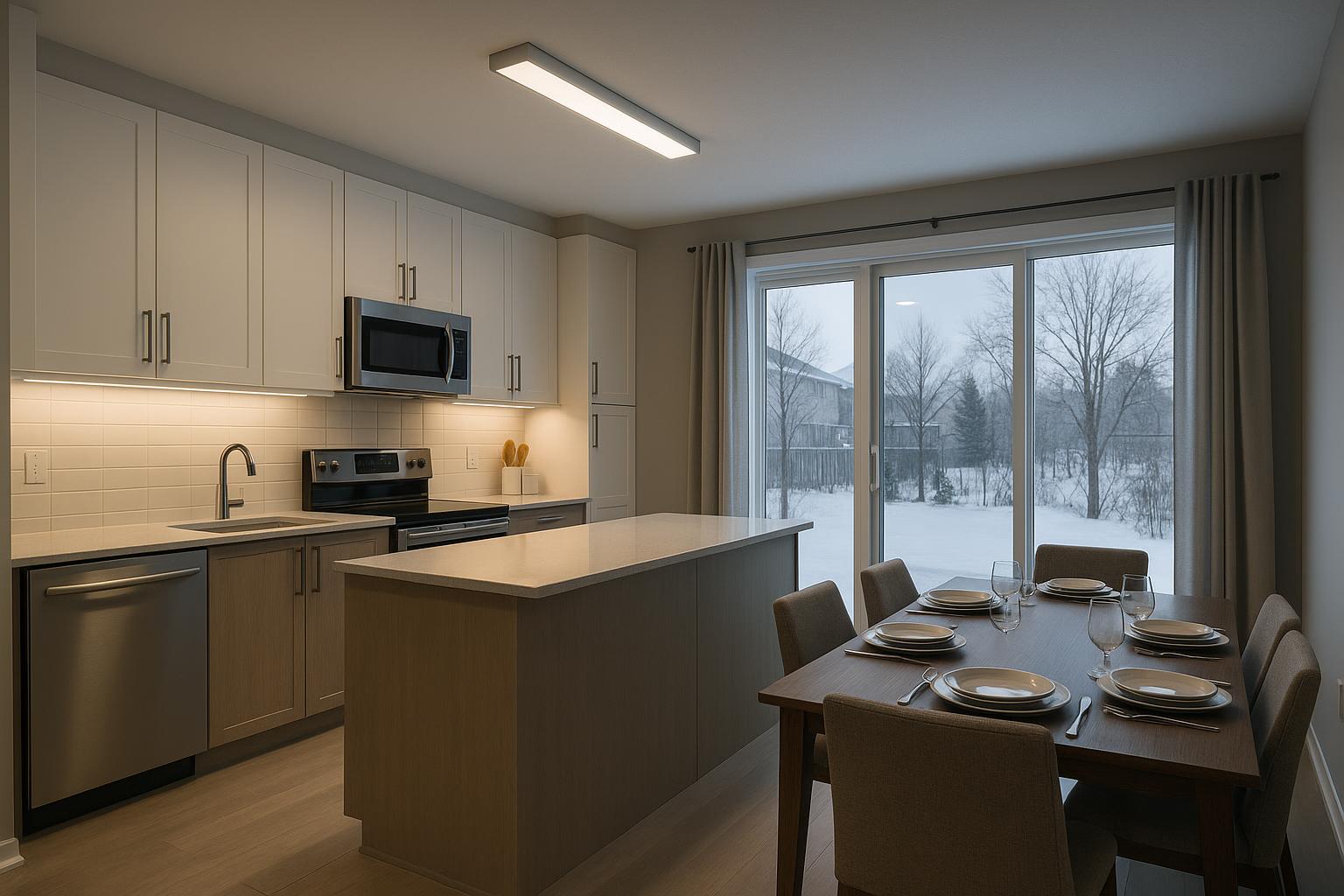
Ceiling lights are often chosen at full brightness, whether in a showroom photograph or from a lumen figure on a product page. At home, however, many fixtures spend much of their time somewhere below maximum output. The family room is brighter for cleaning, moderate on a grey afternoon and lower when the television is on. An open-concept kitchen may need strong general light during food preparation, then a quieter level once dinner is served.
Finding the best dimmable ceiling lights in Canada therefore involves more than confirming that a product can dim. The useful questions concern how it dims, how low it can operate comfortably, what controls it requires and whether its shape distributes light appropriately for the room.
Define the light levels the room needs
Begin with activities rather than atmosphere. Write down when the ceiling light will be the main source, when it will support task lighting and when it will provide only background illumination. This quickly shows whether the room needs a wide dimming range or simply a dependable choice between bright and moderate settings.

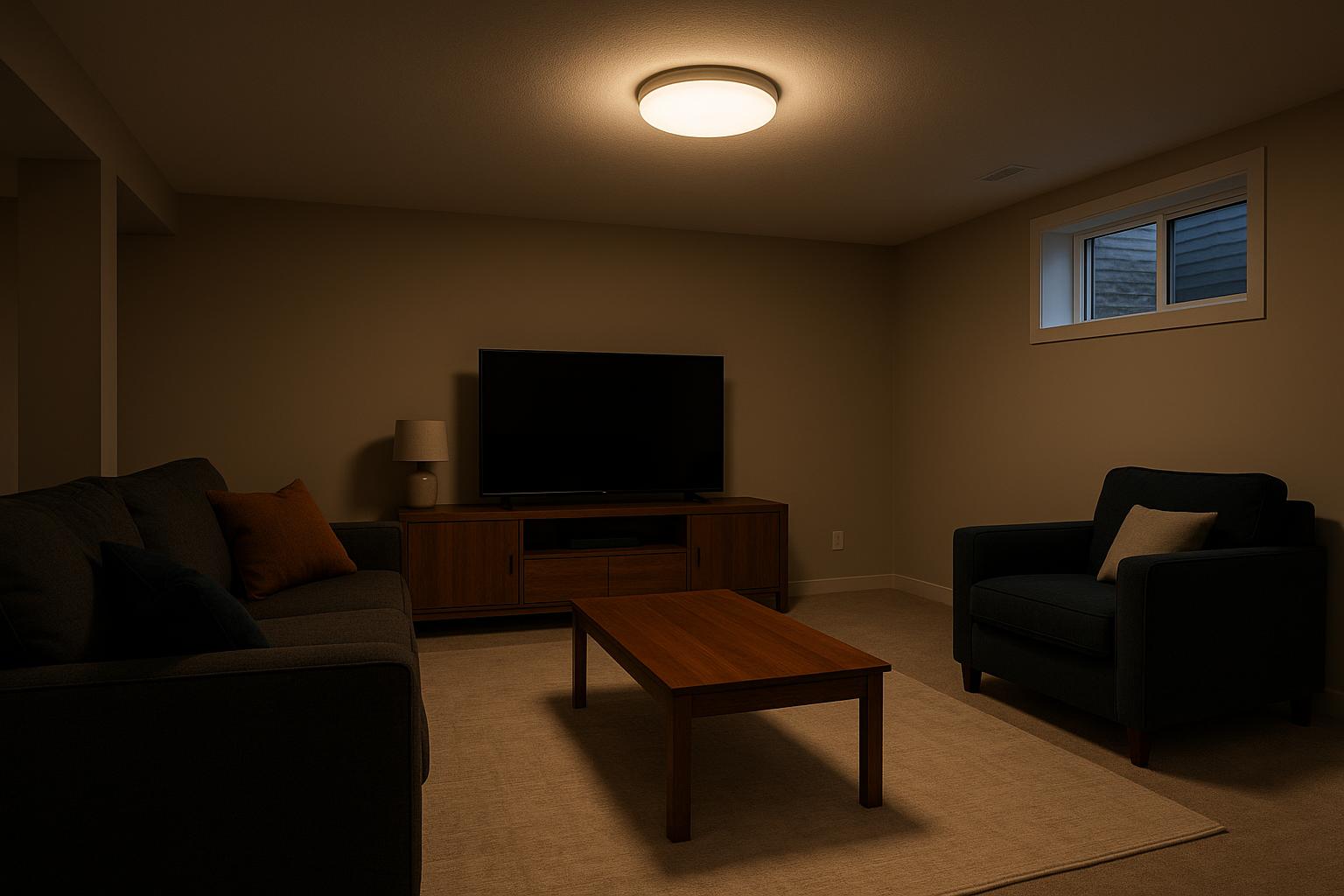
A kitchen usually places more value on the upper and middle parts of the range because counters must remain clearly visible. A bedroom benefits from a lower evening setting, particularly when the ceiling fixture is switched on from the doorway. In a basement family room, where daylight may be limited even at midday, a stable middle setting can be more useful than an extremely low minimum.
Season also changes the brief. Short winter days can make ceiling lighting necessary from late afternoon onward, while snow reflection may temporarily increase the daylight entering a room. Three target levels are usually enough for comparison: detailed activity, everyday use and evening light.
Choose the dimming system before the fixture style
Dimmable light fixtures use several control arrangements, and they should not be assumed to work in the same way.
- Fixtures with replaceable bulbs: The bulb must be identified as dimmable, and the bulb, fixture and wall dimmer must be compatible with one another.
- Integrated LED ceiling lights: The LED source and driver form part of the fixture. The manufacturer specifies whether the product works with a wall dimmer or another control.
- Fixtures with dedicated controls: remote-control ceiling lights may use a supplied handset or product-specific controller for brightness, colour settings or both.
An LED-compatible wall dimmer is not necessarily suitable for every integrated driver. Likewise, a fixture supplied with a remote should not be connected to a separate dimmer unless the instructions expressly allow that arrangement. Establishing the control method early prevents an attractive fixture from reaching the shortlist when it cannot work with the intended switch.
Pay attention to low-end performance
Maximum output is easy to compare, but low-end performance often determines whether dimming feels useful. At a comfortable minimum, the light should remain steady and predictable. Flicker, pulsing, audible buzzing, abrupt jumps or an unexpected shut-off can make the lowest settings impractical.
Check the stated dimming range where one is provided, but do not treat the lowest percentage as a complete measure of comfort. Diffuser size, fixture position, wall colour and nearby reflective surfaces all affect how the result appears. A broad flush mount at a modest output may feel softer than a smaller, more concentrated source producing a similar number of lumens.
To complement this topic, you can also read Modern Wall Lighting, Planned from the Wall Out.
Remote-controlled models may offer fixed steps rather than continuous adjustment. That is not necessarily a disadvantage if the steps correspond to useful settings, but the operating instructions should make the arrangement clear.
Keep brightness and colour temperature separate
Dimming reduces light output. It does not automatically make the light warmer. A conventional dimmable LED generally maintains a broadly similar colour appearance throughout its range. Warm-dim lighting is designed to become warmer as output falls, while tunable-white lighting allows colour temperature and brightness to be adjusted separately.
If a room needs both clear daytime light and a warmer evening appearance, look for colour adjustment as a stated feature. Do not infer it from the word dimmable. Where colour temperatures are listed, lower kelvin values appear warmer and higher values appear cooler.
Room finishes also influence perception. Pale stone, glossy tile and white cabinetry reflect light readily. Dark paint, timber ceilings and deep-coloured upholstery absorb more of it. Similar fixtures can consequently feel quite different in two rooms of the same dimensions.
Plan dimming as part of a layered room
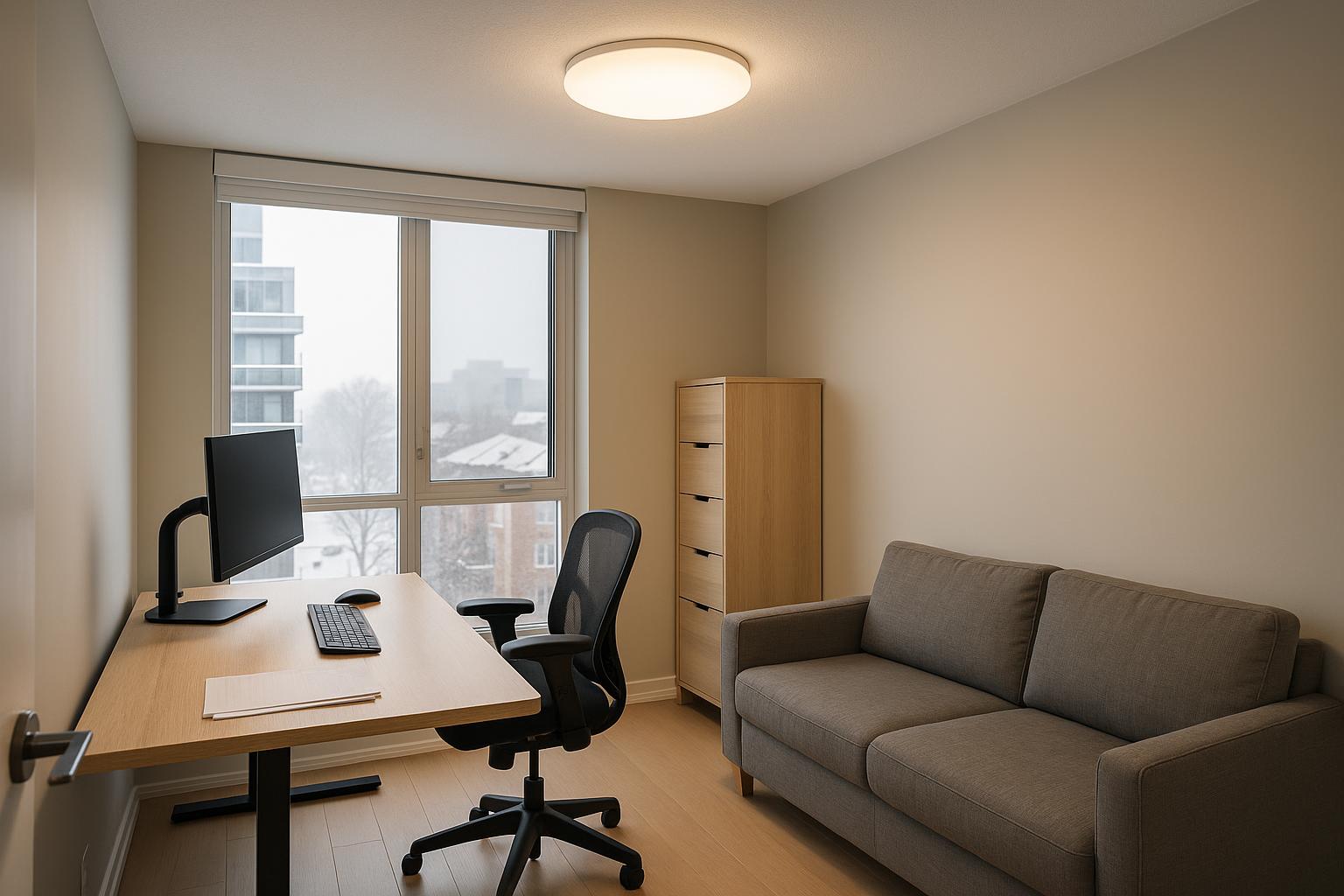
A ceiling fixture does not need to carry every lighting task. In an open-concept kitchen, counter lights can remain bright while the general ceiling light is reduced over the dining area. In a home office, a desk lamp can handle close work while the overhead fixture provides lower-level ambient light for a video call.

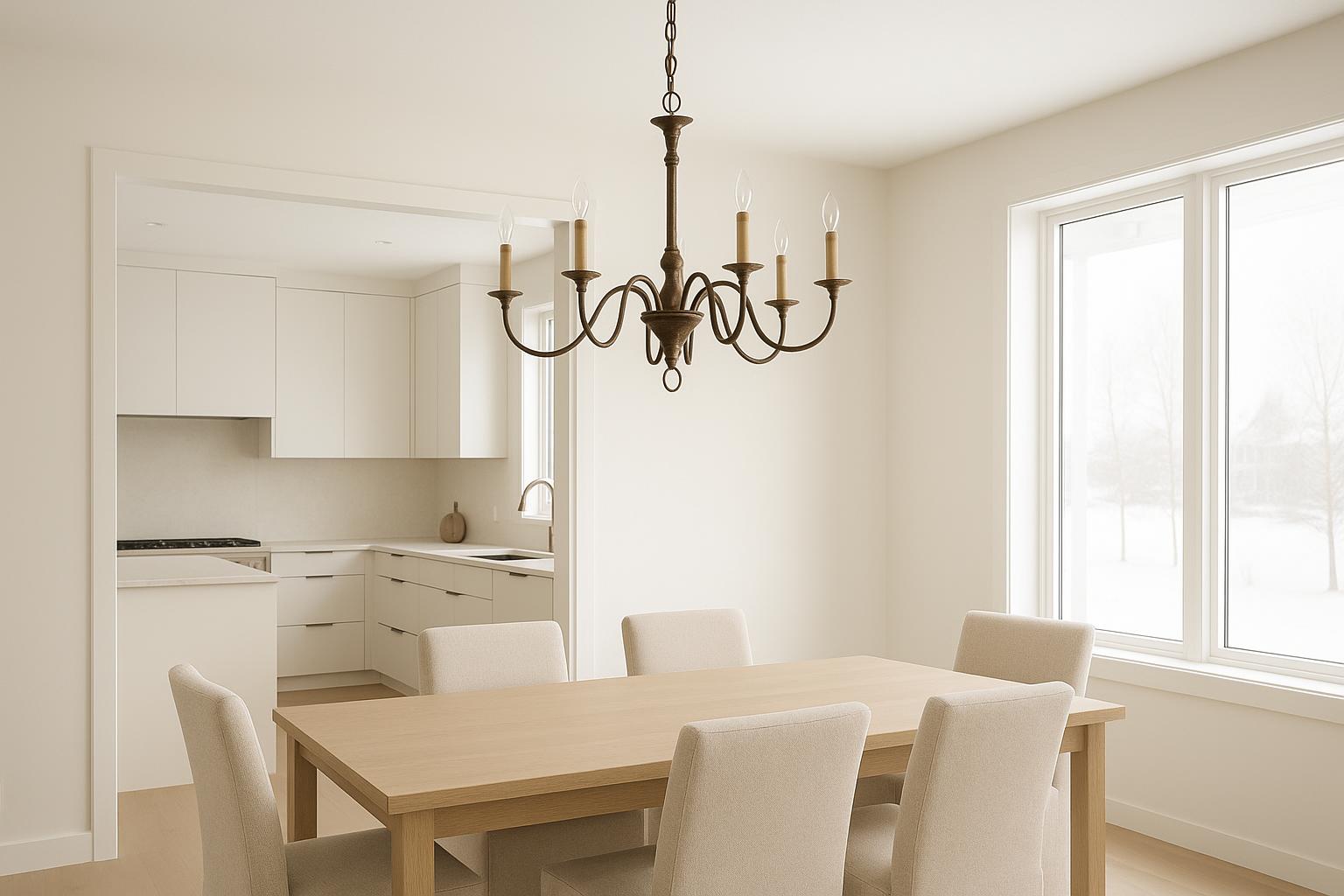
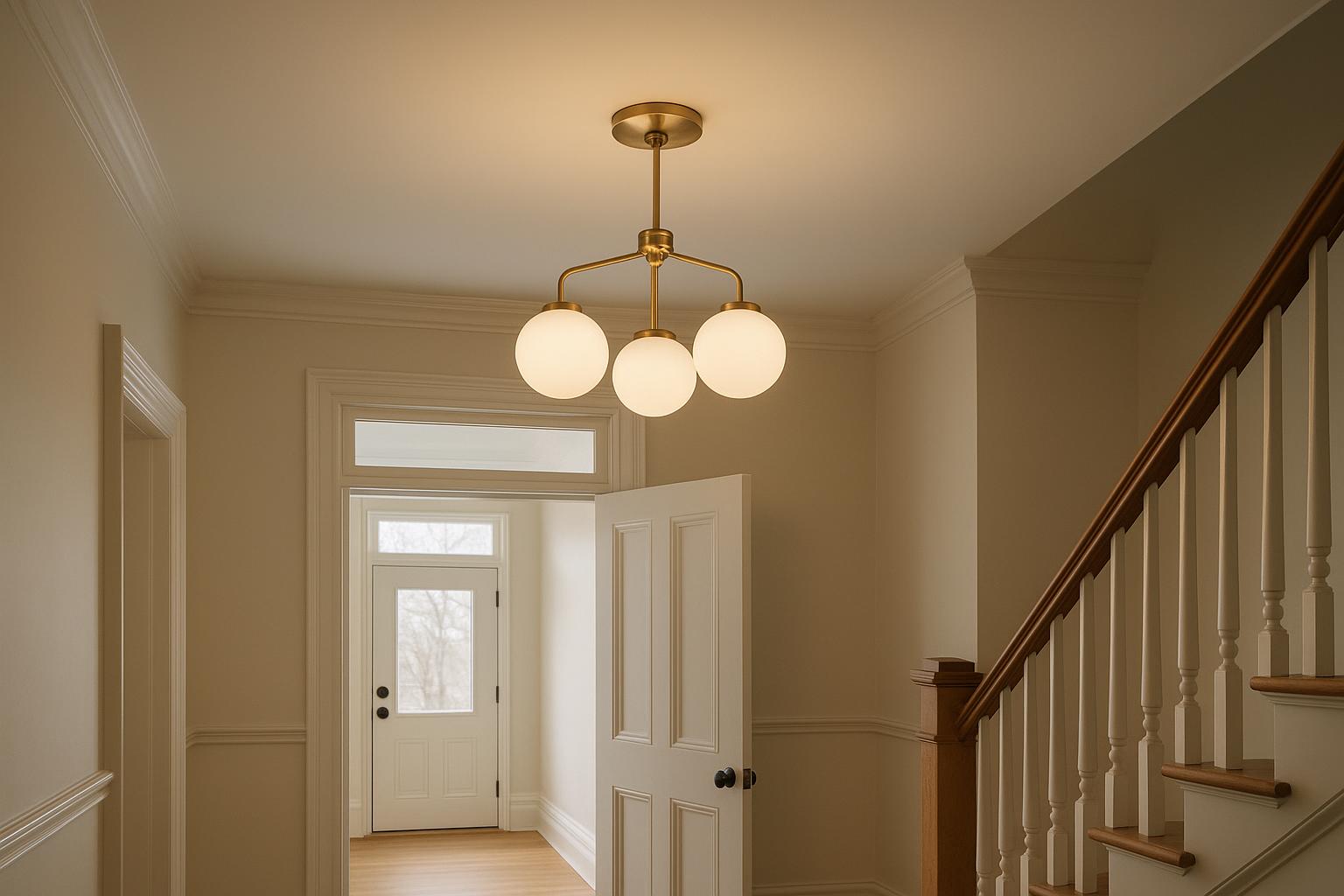
Dining rooms need enough surrounding light to keep faces, serving areas and circulation routes visible. Dimming the only fixture too far can isolate the table in an otherwise dark room. Bedrooms work well when a dimmed ceiling light is supported by bedside lamps or wall sconces. Hallways, stairs and mudrooms generally benefit more from a clear, repeatable level than from dramatic mood lighting.
Bathrooms and kitchens require practical visibility first. Any fixture must also be suitable for its intended location as described in the product information. Dimming adds flexibility; it does not replace appropriate task lighting or location suitability.
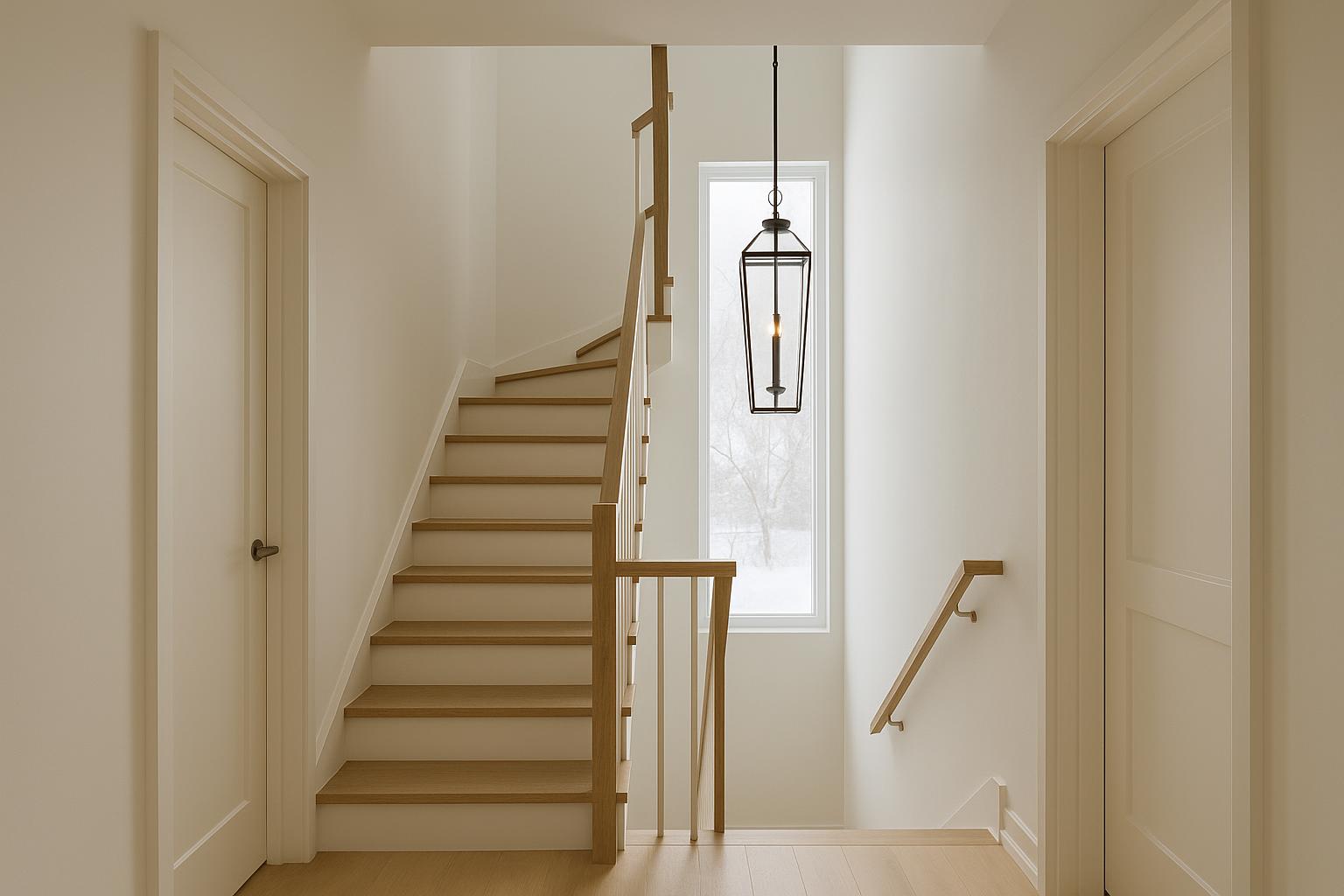
In the same direction, A Stairwell in Section: Choosing Pendant Scale, Position and Light offers useful ideas for choosing home lighting more confidently.
Match the fixture profile to the ceiling
Dimming cannot correct a fixture that hangs too low or feels out of scale. A condo with a low ceiling will often suit a flush mount with a broad diffuser, preserving headroom while spreading ambient light across the room. A semi-flush mount adds visual depth where clearance permits, but its drop should be checked against doors, cupboards and normal circulation.
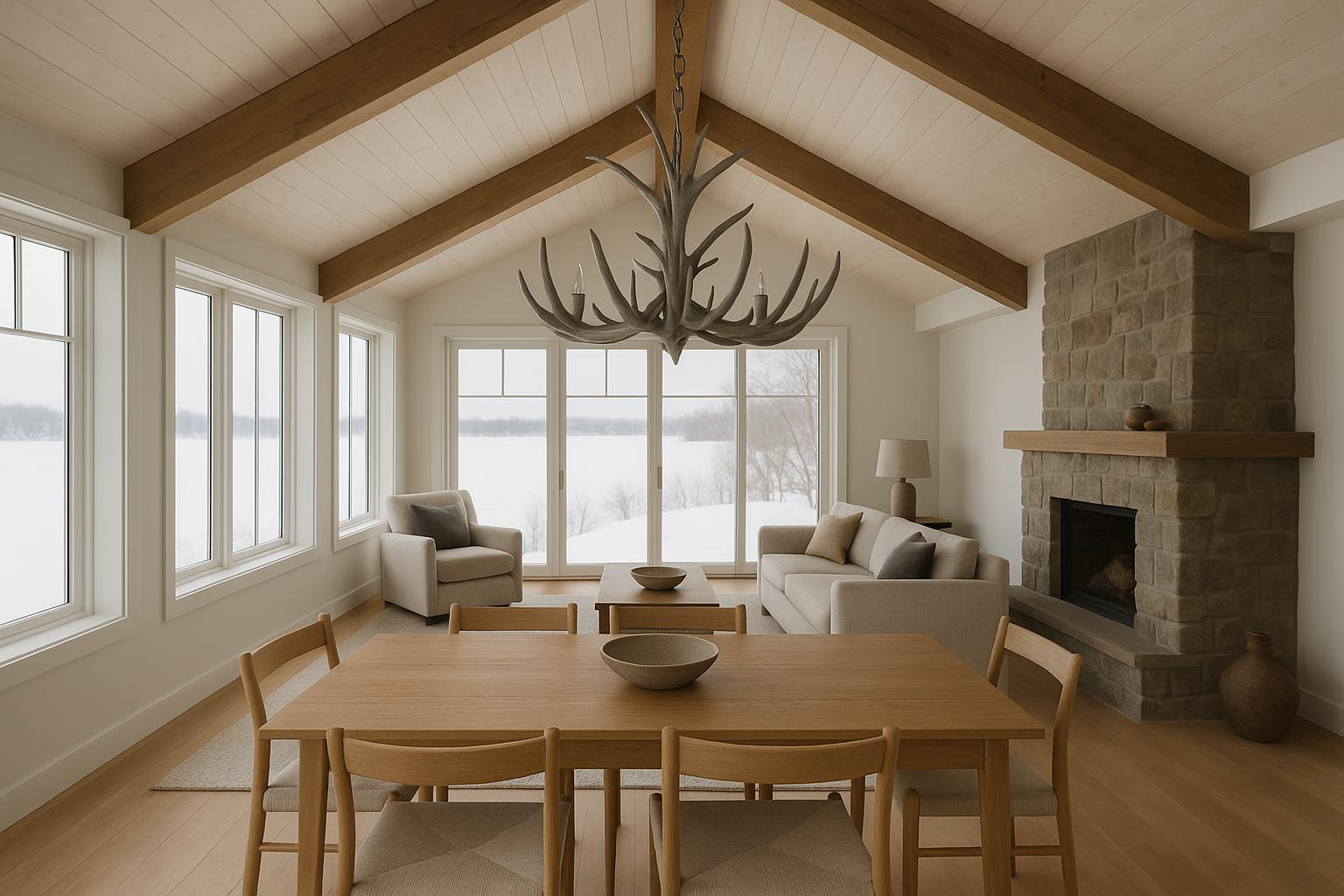
Larger rooms and vaulted cottage ceilings can accommodate fixtures with greater diameter or depth. Even there, consider the view from adjoining areas. In an open plan, a ceiling light may sit behind pendants or a chandelier, and too many competing forms can make the ceiling look crowded.
Check diameter, overall drop and canopy dimensions rather than relying on a tightly cropped photograph. A paper template fixed temporarily to the ceiling can help test the apparent size in a compact bedroom, foyer or hallway.
Select controls people will use
A wall dimmer is familiar, always in the same location and easy for guests to understand. A remote can be convenient beside a bed or sofa, provided it has a consistent storage place. A handset that regularly disappears between cushions is unlikely to remain the preferred control.
For remote-control ceiling lights, review how the fixture behaves after power is interrupted. Memory functions, pairing procedures and the relationship between the wall switch and remote vary by product. If several household members use the room, a small number of easy-to-reproduce settings may be more practical than a long menu of modes.
For more consistent lighting throughout the home, the article Pendant Lights: Your Ceiling's Favorite Accessory! may also be helpful.
Also consider where control is needed. A bedroom may benefit from adjustment at the bedside, while a busy kitchen is usually better served by a control near the main entrance. Convenience depends as much on placement and routine as on the number of features.
Verify the details before ordering
Make a short record of the room requirements, then compare each candidate against the same points. Use lumens, where supplied, to assess light output rather than relying on wattage alone.
- Confirm whether the fixture uses replaceable bulbs or an integrated LED.
- Check the stated dimming method and any compatible control requirements.
- Review the minimum setting, adjustment steps and colour functions.
- Measure fixture diameter, overall drop and available ceiling clearance.
- Check what controls, bulbs or installation parts are included.
- Confirm suitability for the intended room and location.
Keep the product instructions available for installation and setup. Where installation involves a new control, altered wiring or a ceiling connection, use a qualified electrician familiar with applicable provincial and local requirements.
Make the final comparison
The strongest choice is not necessarily the fixture with the longest feature list. It is the one that fits the ceiling, provides enough light for the room's main activities and reaches a comfortable lower level without awkward controls.

Browse Top Lighting's dimmable ceiling lights by comparing dimensions, light-source details and stated control methods against your room plan. A well-matched fixture should make changes in brightness feel routine, carrying the space from practical winter-afternoon light to a calmer evening setting without fuss.