A practical guide to evaluating dimmable ceiling lights at the levels where they will actually be used, from bright...
- There are no more items in your cart
- Shipping
- Total $0.00
Modern Wall Lighting, Planned from the Wall Out
Wall lighting is most successful when the illuminated surface matters as much as the fixture. A compact sconce can reveal the grain of wood panelling, give depth to a basement family room or place useful reading light beside a bed. It can also cause glare, cast awkward shadows or obstruct a narrow passage if its beam and projection are ignored.
That makes planning more important than choosing a fashionable silhouette. Begin with the room after sunset: note which walls disappear, where faces need clearer light and which activities are poorly served by the ceiling fixtures. Modern wall lights can then fill a defined gap rather than becoming another decorative object competing for attention.
Decide what the wall light must accomplish
Assign each fixture a principal job. Ambient wall lighting softens contrast and makes the boundaries of a room visible. Task lighting directs light towards a book, work surface or mirror. Accent lighting draws attention to material, artwork or architectural detail. One fixture may contribute to two layers, but it is rarely equally good at all three.

- For ambient light: consider diffused glass, a broad wash or an indirect source that reflects from the wall.
- For task light: look for shielding, adjustment and a beam that reaches the working position.
- For accent light: confirm the beam direction and spread instead of relying on the fixture's front view.
This decision also clarifies how much support is needed elsewhere. A decorative sconce beside a fireplace may create atmosphere while pot lights or a floor lamp provide usable illumination. It does not need to carry the entire room.
Judge the beam on the actual wall
Wall colour, sheen and texture change how a fixture performs. Pale matte paint tends to spread reflected light gently. A dark wall absorbs more light and can make the same fitting appear subdued. Glossy tile, polished stone and mirrors may produce bright reflections even when the source itself is partly concealed.
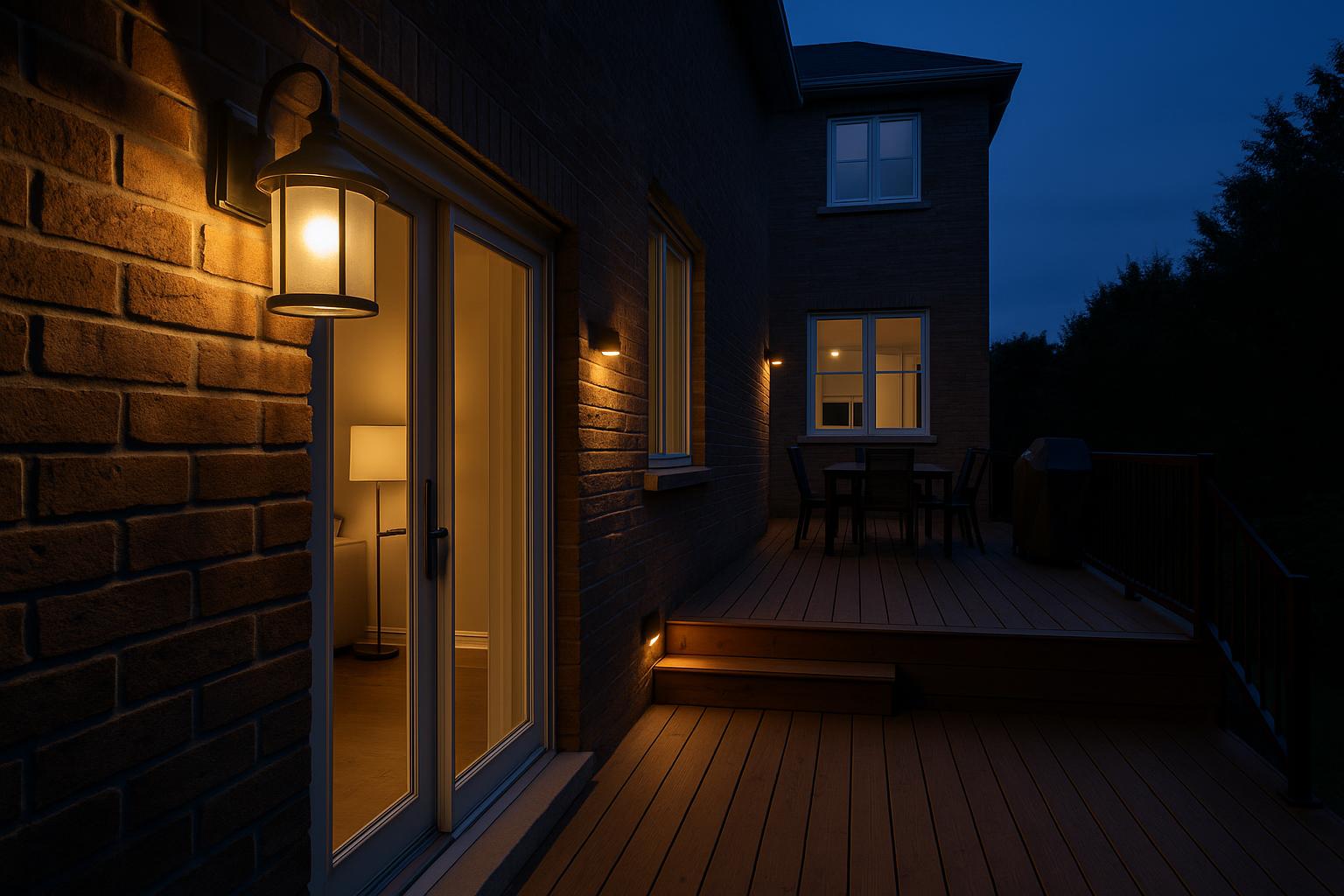
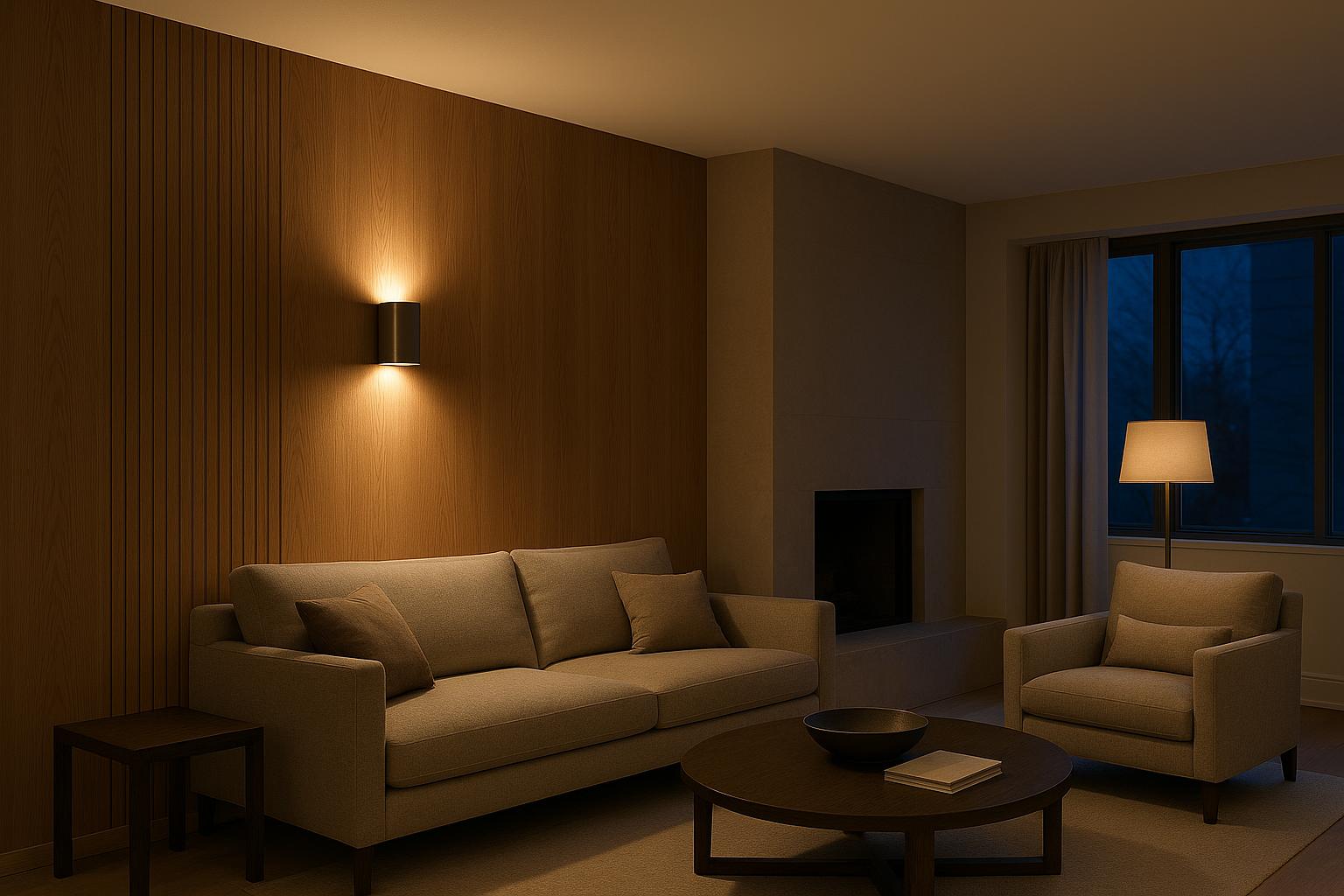
Directional light is especially revealing on brick, fluted panels and rough plaster. Grazing light can make those materials look rich and dimensional, but it also emphasizes uneven joints and surface flaws. If the electrical work is still at the planning stage, test a portable light from the proposed position. Move it closer to and farther from the wall to see how the shadow pattern changes.
Up-and-down LED wall lights often create a crisp graphic effect, while contemporary wall sconces with opal or frosted diffusers usually produce a quieter field of light. Neither approach is universally better; the choice depends on whether the wall should command attention or recede into the room.
Measure projection and inspect every sightline
Width and height are only part of the fixture's scale. Projection determines whether a wall light feels comfortably integrated or physically intrusive. This is critical beside doorways, in compact foyers and along condo hallways. Mark the fixture outline with low-tack tape, then hold a piece of cardboard perpendicular to the wall at its listed depth. Walk past it while carrying a laundry basket or winter coat.
Check the light source from more than one viewpoint as well. A lamp that is shielded while standing nearby may be exposed to someone sitting on a sofa across the room. In an open-concept kitchen and dining space, inspect the proposed position from the island stools, dining chairs and adjoining living area. Designer wall fixtures with deep profiles or exposed lamps need particular care when they remain within a long sightline.
To complement this topic, you can also read A Stairwell in Section: Choosing Pendant Scale, Position and Light.
Use spacing to support the architecture
A single wall light can mark a reading corner, an artwork grouping or the end of a short passage. A pair brings order to a bed, sideboard or fireplace. Repetition works well along a longer hallway, but the spacing should respond to doors, trim and changes in wall width rather than follow an arbitrary formula.
Choose a clear alignment reference. Fixtures beside a sideboard usually relate more convincingly to the furniture than to the outer edges of the wall. Sconces between windows should align consistently with the openings. Where an older townhouse has off-centre electrical boxes or irregular trim, a deliberately asymmetrical arrangement may look calmer than forcing false symmetry.
Repeated fixtures also need consistent light output and colour. Minor variations are more obvious when identical beams appear in a row, especially on a plain wall.
Build a calmer living and dining layer
Wall lighting can define a seating or dining zone without adding more fittings to the ceiling. Slim vertical sconces make use of narrow strips beside a fireplace, while broader diffused forms can give a blank wall visual weight. In a room with low condo ceilings, this lower layer helps the space feel settled after dark without drawing every glance upward.

Behind a dining sideboard, a matched pair can frame the furniture and provide a softer setting for dinner. Keep the beam clear of displayed glassware if reflections would be distracting. When artwork shares the wall, verify that the fitting illuminates the piece evenly and follow any lighting guidance supplied for the work.
Adjustable sconces near an armchair can support reading, but test whether the head reaches the page without shining towards adjacent seats. A floor plan showing furniture dimensions is useful here; a nominal reading corner is not enough if the beam falls behind the chair.
Move task lighting off desks and nightstands
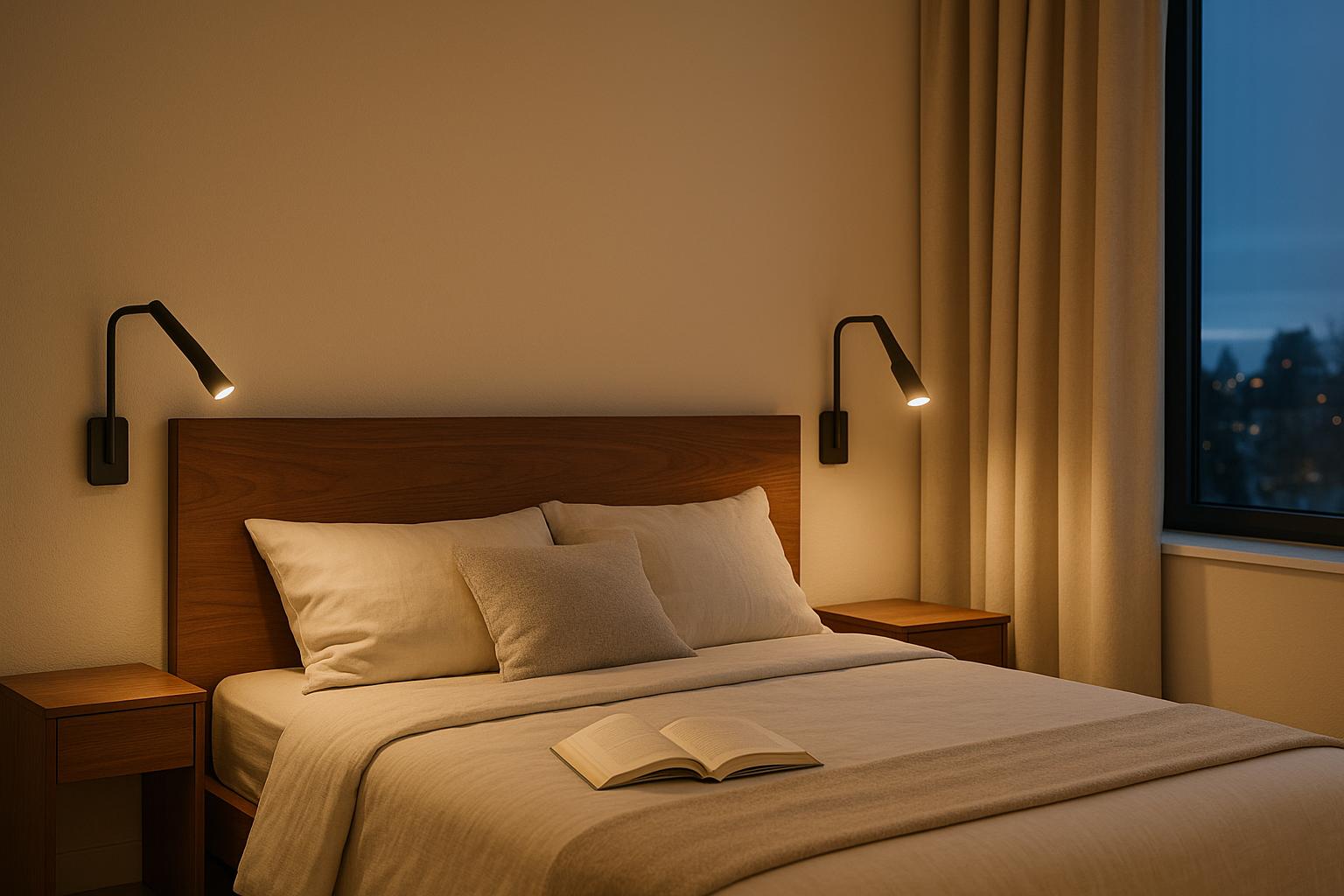
Bedside wall lights free small nightstands for books, water and personal items. Their position should be based on the finished mattress height, headboard and the reader's shoulder position. Controls need to be reachable from bed, and a swing arm should clear the headboard, wardrobe doors and any nearby window covering.
In the same direction, Pendant Lights: Your Ceiling's Favorite Accessory! offers useful ideas for choosing home lighting more confidently.
Fixed diffused fixtures suit general bedside light. Adjustable heads provide a more concentrated reading beam, while models combining a soft background glow with a focused source offer useful separation between mood and task lighting. Check each function and control arrangement in the product information.
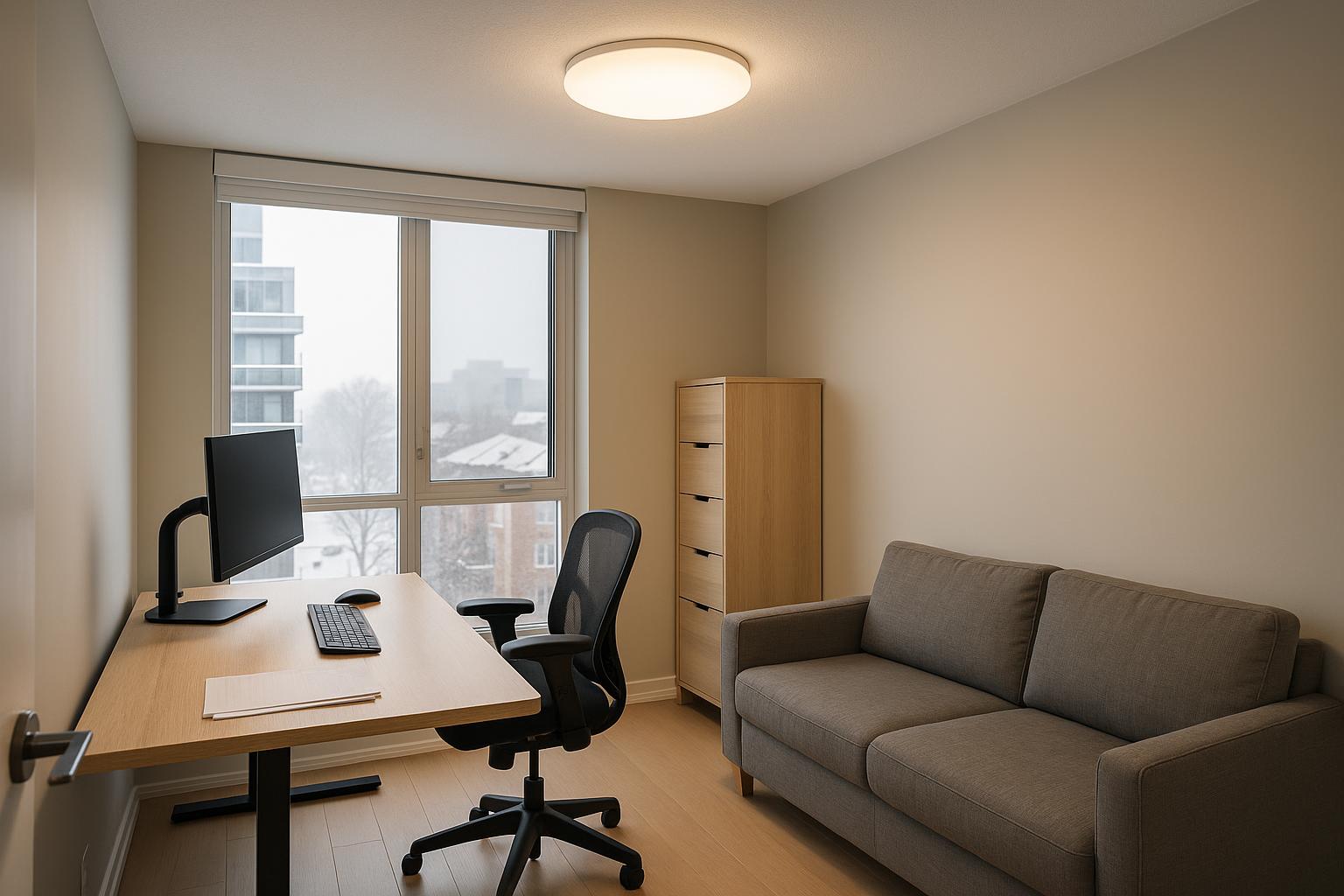
A wall-mounted light can also preserve desk space in a home office. Direct the beam from the side to reduce hand shadows, then inspect the monitor for reflections from both seated and video-call positions. Minimalist wall lights may look unobtrusive when switched off, but their beam still has to reach the actual work area.
Make circulation spaces easier to navigate
Hallways, stairs and basement passages favour shallow profiles and controlled brightness. A row of modest sconces can provide continuity without creating a bright pool at one end and darkness at the other. Keep the rhythm visibly consistent, adjusting only where a doorway, landing or structural change makes the reason apparent.
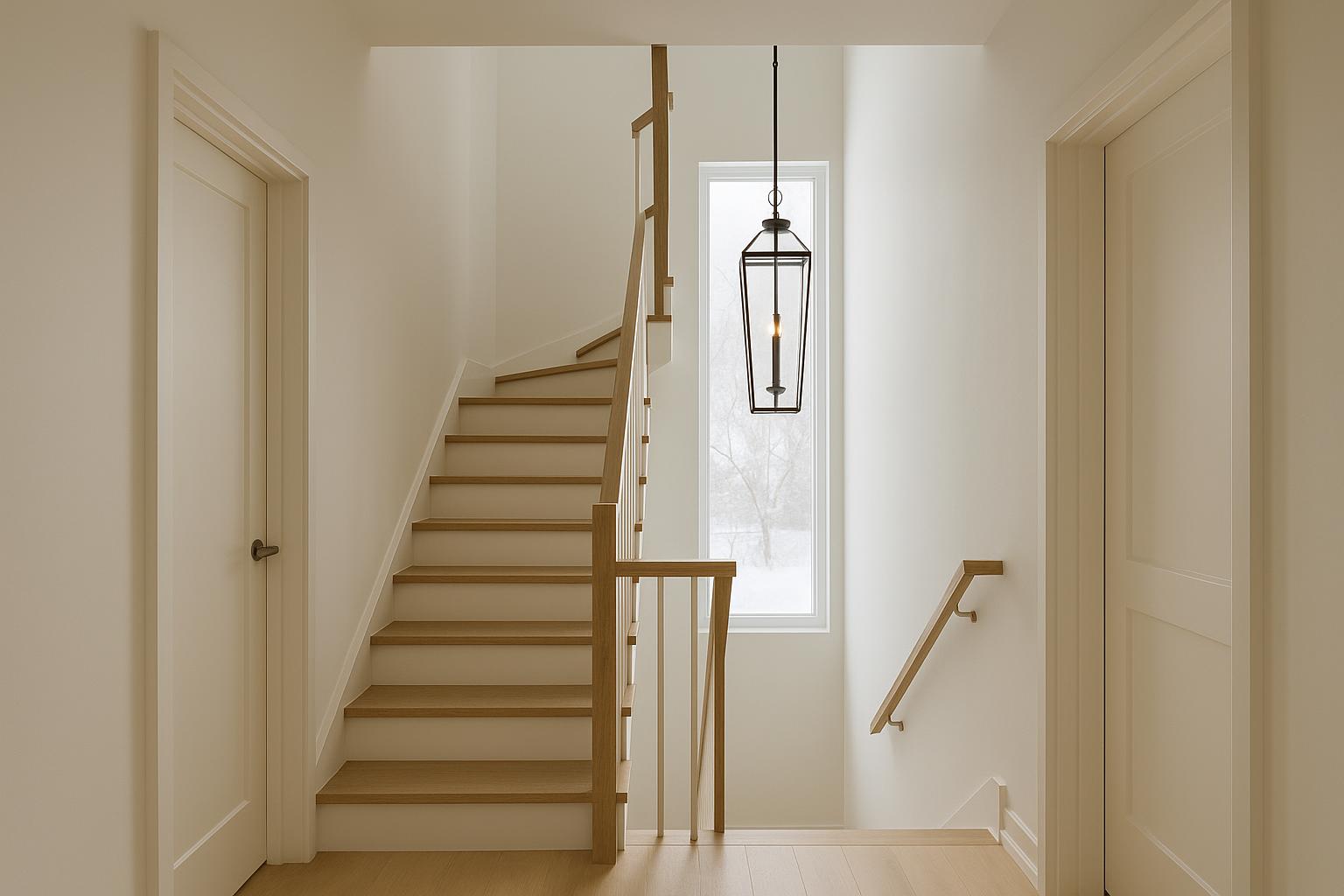
On stairs, consider the view from below. An exposed source can become uncomfortable as someone climbs towards it. Shielded or indirect fixtures are often easier to live with. Wall washing can also make a basement feel less enclosed by revealing its perimeter, although it should supplement dependable general and task lighting rather than replace them.
Place projecting or adjustable fittings away from the path of shoulders and carried objects. A dramatic form that works over a console may be unsuitable in a narrow route between a mudroom and kitchen.
Treat bathroom lighting as more than decoration
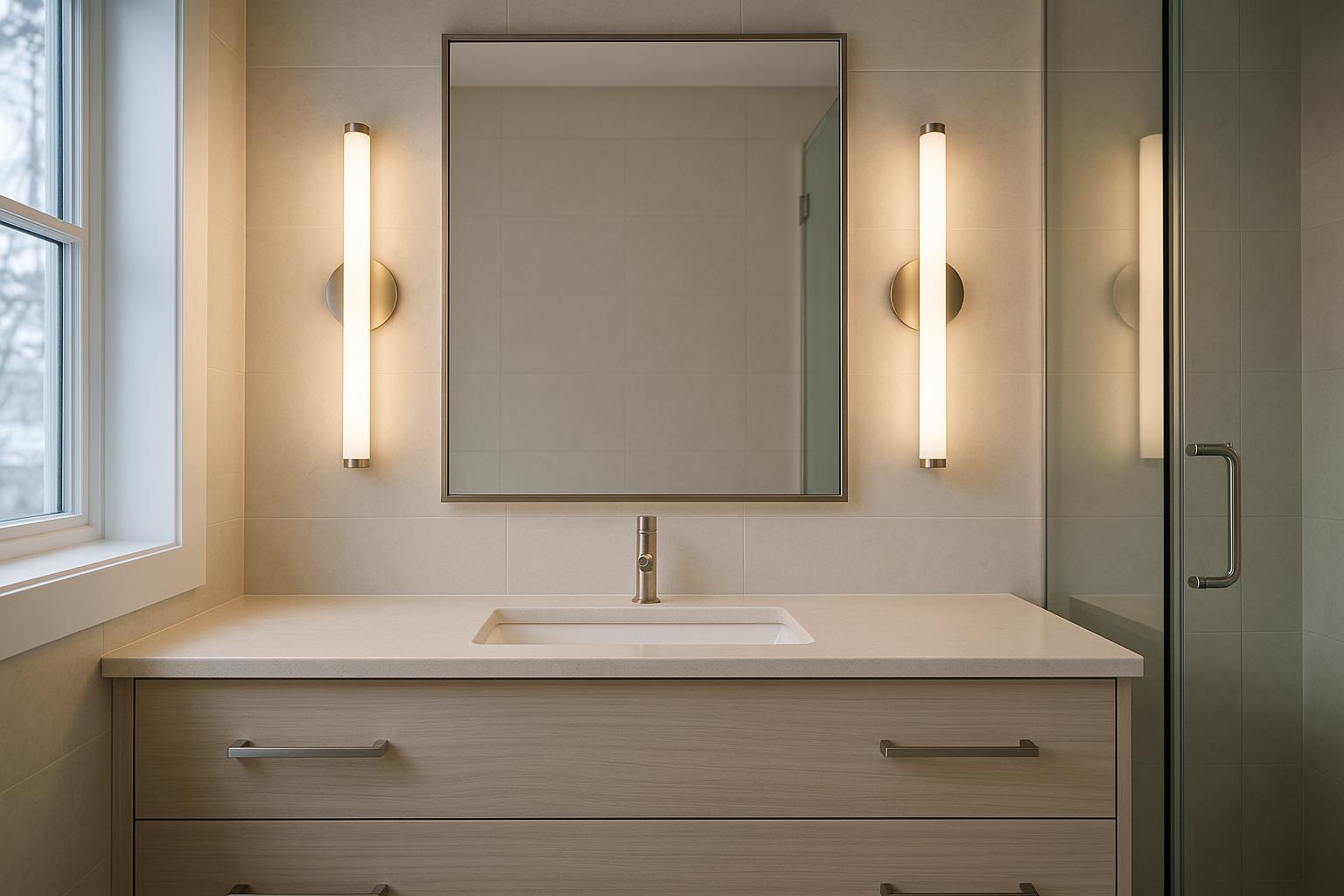
Light from both sides of a mirror generally gives the face more even illumination than one strong overhead source. Vertical fixtures can cover a useful portion of the face, while compact sconces may fit a small powder room. Before committing to a position, check reflections in mirrored cabinets, shower glass and glossy tile. A visible lamp can appear twice as bright when reflected directly.
Product suitability depends on the intended location, not simply on whether a fixture is described as a bathroom style. Confirm the manufacturer's environmental and installation information for the exact model. Electrical placement and installation should be reviewed by a qualified electrician familiar with applicable provincial and local requirements.
Review the details before placing an order
Compare the fixture dimensions with the electrical box, wall construction and nearby obstructions. For integrated LED wall lights, review the listed colour temperature, colour quality, dimming compatibility and service information. For replaceable-lamp fittings, confirm the lamp base, allowed dimensions and whether the lamp will remain visible.

- Mark the full width, height and projection on the finished wall.
- Check whether the beam points towards eyes, screens or reflective surfaces.
- Compare finishes with nearby hardware in daylight and evening light.
- Confirm that the fixture, light source and dimmer are compatible.
- Plan switching before walls are closed or finishes are complete.
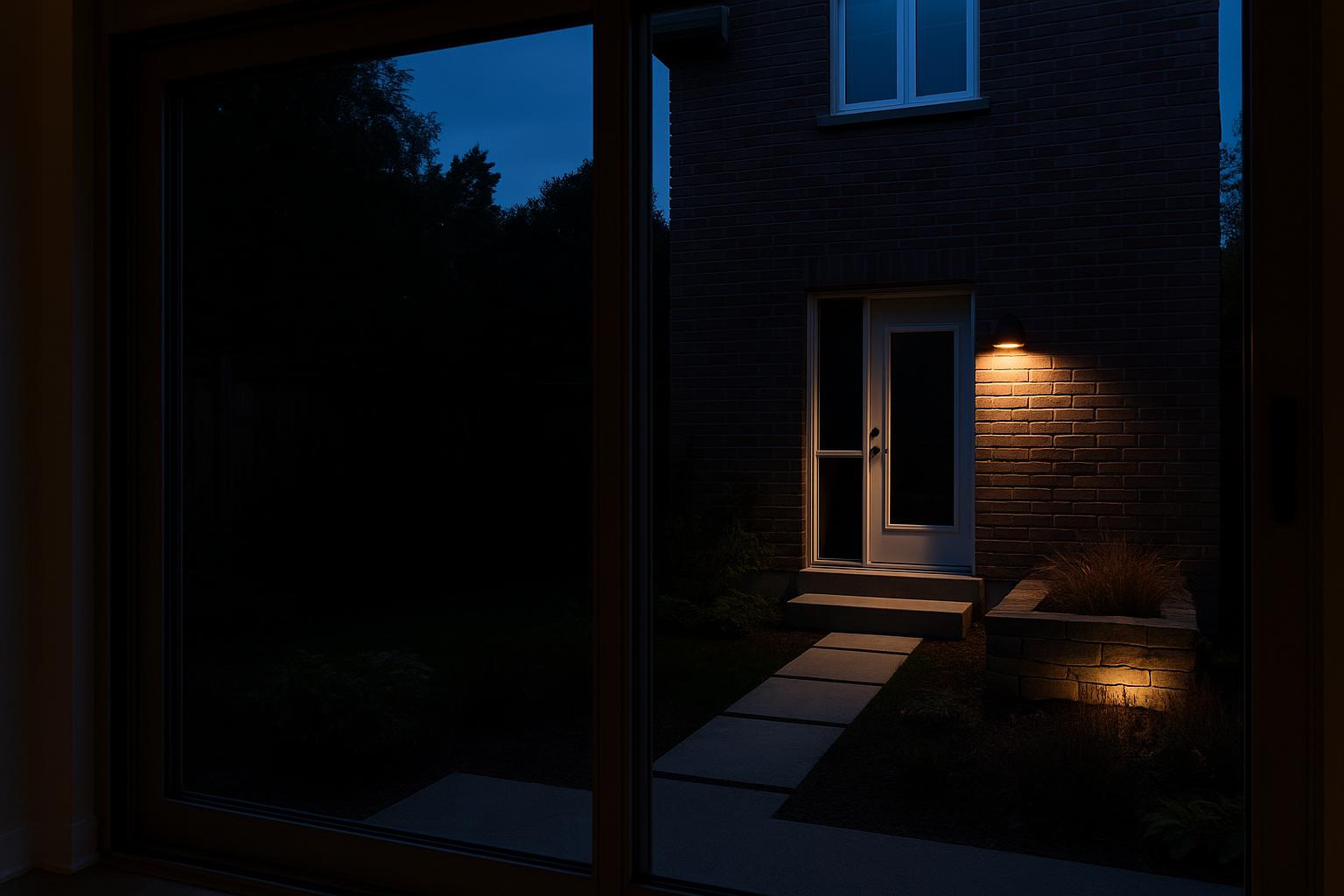
Finish samples can change noticeably after sunset. Black forms a strong outline, brushed metals catch small highlights, and wall-coloured finishes can nearly disappear when switched off. Snow reflection through a window may also make pale finishes and cool metals look crisper during the day than they do under warm interior light.
With the intended role, projection and sightlines established, browse the modern wall lights collection using your measurements as a filter. A restrained choice made for the wall, furniture and viewing position will remain useful long after its shape stops feeling new.