A useful garden lighting plan identifies what must remain visible, what deserves emphasis and which areas should stay...
- There are no more items in your cart
- Shipping
- Total $0.00
The Room Does Not Have to Match the Chandelier
A French country chandelier can be the oldest-looking object in a room without making everything else follow its lead. That is often the difference between an interior that feels collected and one that resembles a coordinated furniture display.
The style is recognizable through curved arms, candle-style lights, open frames, aged metal and, in some cases, carved or weathered wood. Those details already carry plenty of character. The surrounding room does not need lavender fabric, decorative roosters or a complete suite of distressed furniture to explain them. More useful French country chandelier ideas begin by deciding what the fixture should contribute and what the rest of the room should leave alone.
Give the chandelier one clear role
Before comparing finishes, describe the room in practical terms. Is it too severe, visually empty, overly new or short on architectural detail? The answer identifies the chandelier's job.

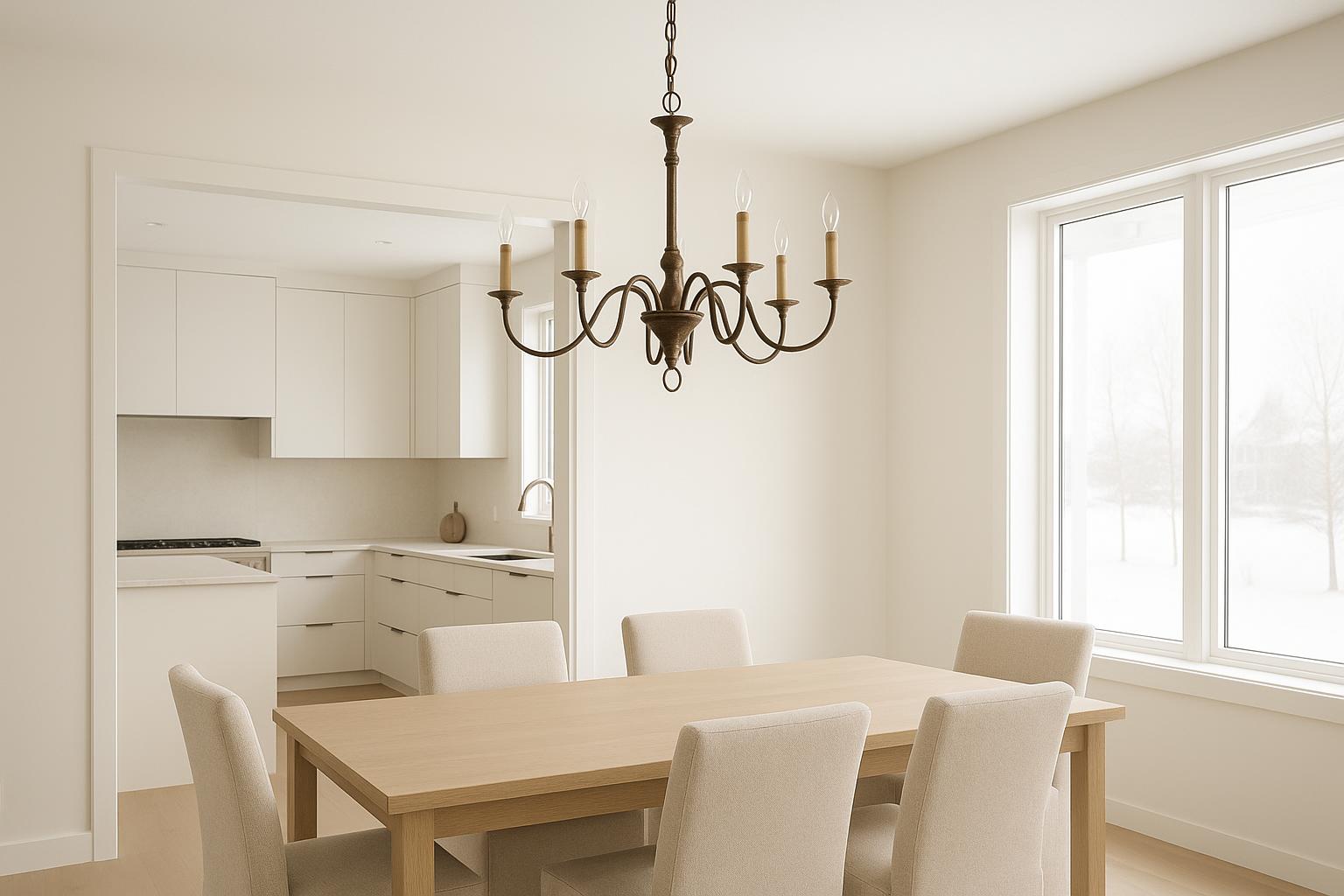
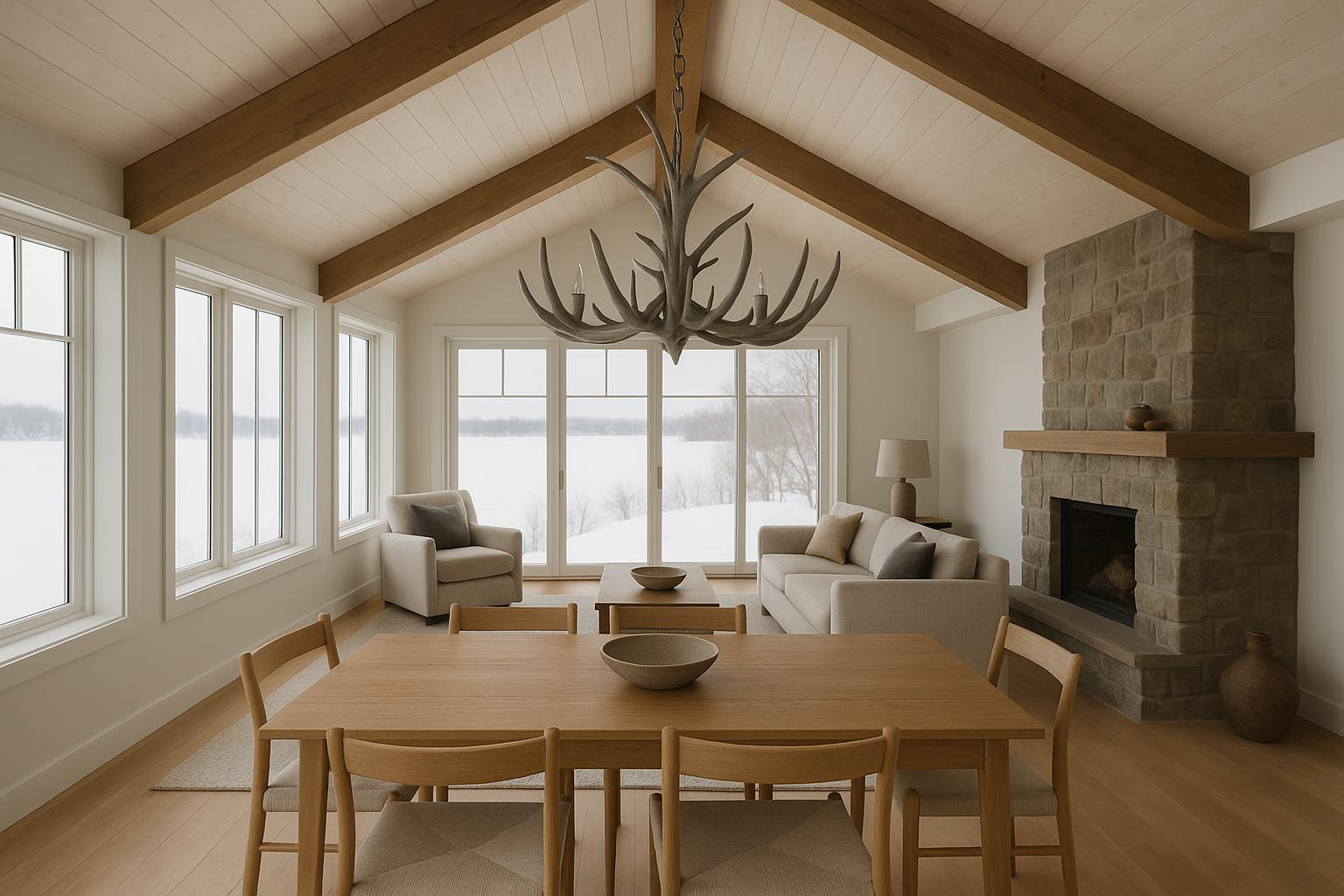
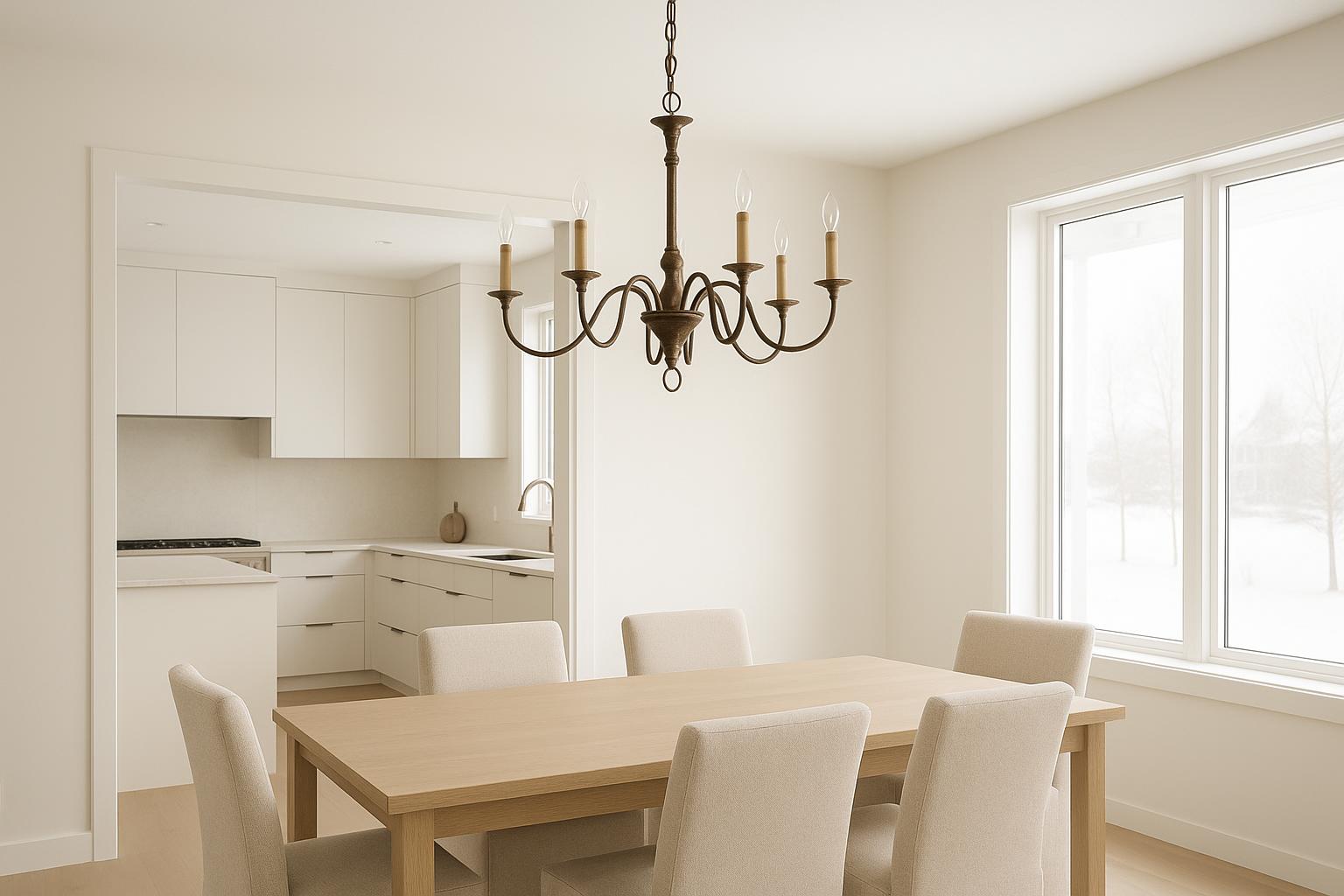
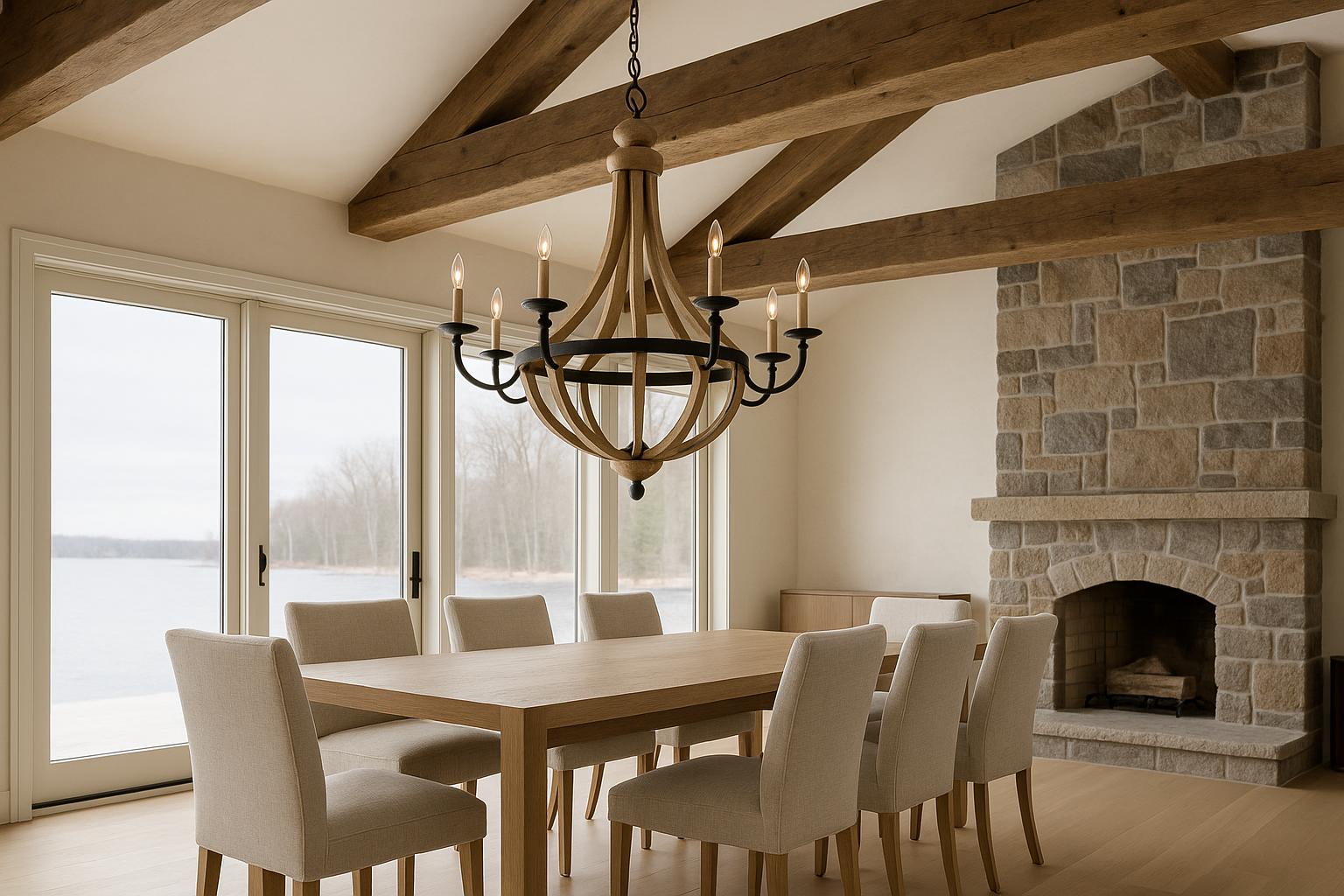
A slender fixture with scrolling arms can soften an open-concept kitchen lined with flat-front cabinetry. A broad wood-and-metal frame can give a vaulted cottage dining area enough visual weight. In a heritage room with detailed trim and an ornate ceiling rose, the better choice may be a quieter fixture that supports the architecture rather than competing with it.
Limit the assignment to one or two qualities. Asking a chandelier to provide rustic texture, formality, sparkle, contrast and most of the room's illumination at once usually leads to an overworked result. If its main role is to introduce age and movement, let lamps and wall sconces handle other needs.
Shop from a photograph of the room
A product image isolates the fixture against a controlled background. Your home will not. Photograph the intended location from the doorway and from the seat used most often, then consider each chandelier against what will actually appear behind it.
An intricate outline can become muddled in front of open shelving, patterned curtains or a gallery wall. The same fixture may read clearly against a plain ceiling, a calm window or a simple painted wall. In a compact condo, this background can matter as much as the listed diameter because the chandelier is viewed through several overlapping zones.
Look at the fixture as a solid shape before studying ornament. A dark, densely built chandelier will appear larger than an airy design with the same outside dimensions. Thick wood members and broad candle sleeves add visual mass; fine arms and open space reduce it. A quick paper silhouette held in the room is more informative than a style label.
To complement this topic, you can also read Let the Cottage Lead: A More Restrained Antler Pendant.
Create tension between old and new
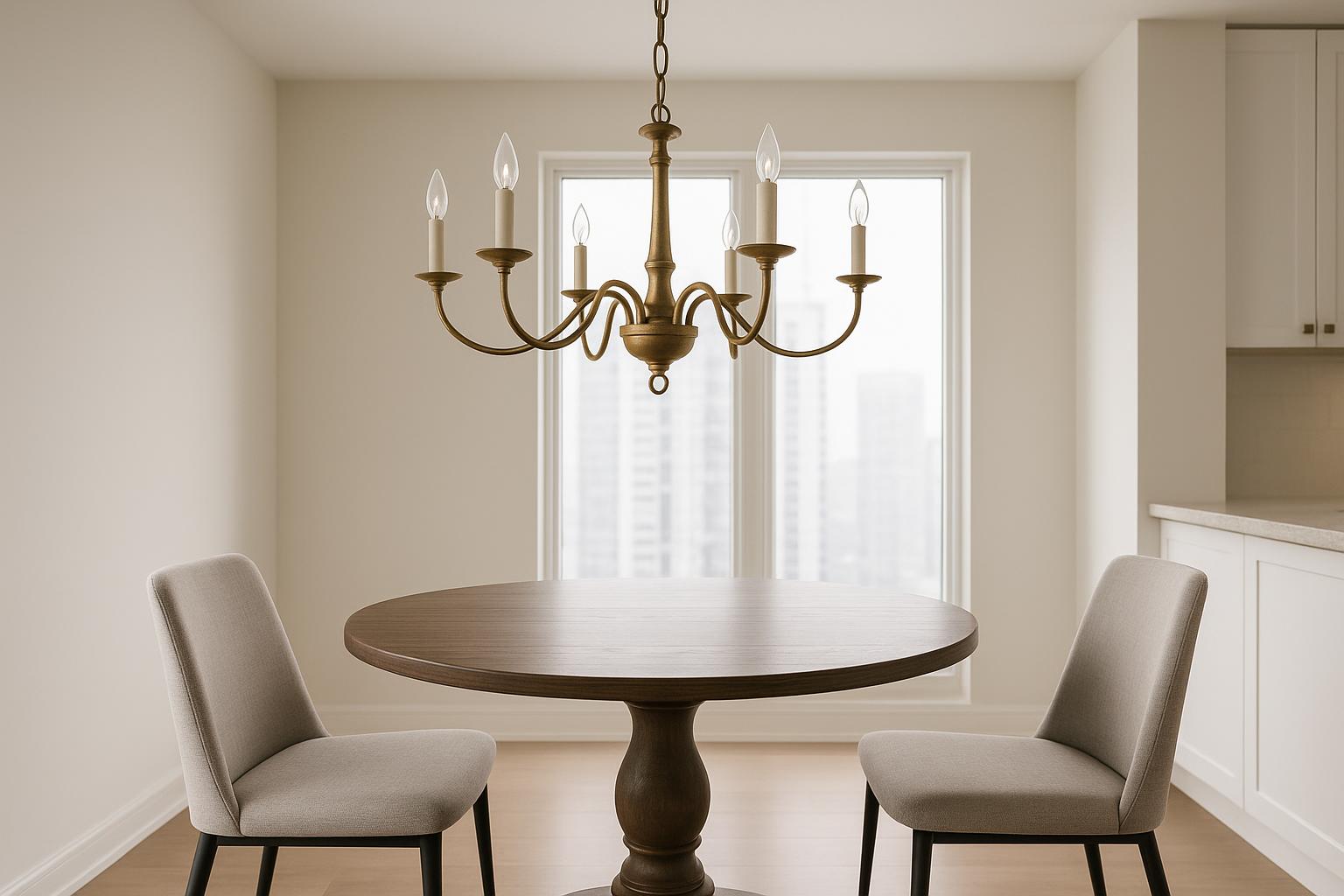
The chandelier becomes more convincing when it is not surrounded by objects trying to imitate it. Pair graceful arms with a plain oak table, tailored upholstery or contemporary cabinetry. Set weathered wood against smooth plaster and simple linen. Allow dark metal to stand out against warm white paint rather than repeating black hardware on every surface.
This is also where French country lighting separates itself from some farmhouse chandeliers. Farmhouse designs often emphasize utility through heavy timber, black cages or straightforward construction. French country fixtures usually bring a more decorative rhythm, even when the materials are rustic. If the room already contains substantial beams, stone or rough wood, a lighter and more graceful chandelier may supply the contrast it needs.
- For a new-build dining room: introduce age through the chandelier, then keep the table and chairs simple.
- For a traditional townhouse: choose restrained curves so the fixture does not compete with mouldings and trim.
- For a cottage great room: use enough texture to register at a distance, but leave generous open space within the frame.
- For a condo breakfast area: favour width over excessive drop, provided the design and installation requirements suit the ceiling.
Scale the fixture to what sits below it
A dining chandelier belongs to the table composition, not to the abstract centre of the ceiling. If the table moves off-centre to preserve a walkway or make room for a sideboard, the light fixture may need to move with it. An electrician can advise whether the existing outlet can be relocated or whether an approved suspension arrangement is appropriate.

Round tables generally work well with fixtures that have a balanced radial shape. A long rectangular table needs visual breadth, whether that comes from an elongated frame, a generously scaled round chandelier or more than one coordinated light where the electrical plan permits. A narrow fixture stranded over the middle of a long table can make both objects look smaller.
Do not assess suspension height while standing only. Sit at the table, look across it and check whether the lowest arms or drops interrupt faces. Then stand at the main doorway and confirm that the chandelier still feels connected to the furniture. Make a full-size mock-up using the manufacturer's width and height in centimetres. It should represent the body as well as the chain or rod; extra chain does not make an undersized fixture more substantial.
Low condo ceilings call for a compact body, shallow arm sweep or suitable semi-flush interpretation rather than a miniature version of a tall chandelier. Vaulted and double-height spaces create the opposite problem: the body must remain legible from the floor. For a sloped ceiling, confirm canopy and suspension compatibility before ordering.
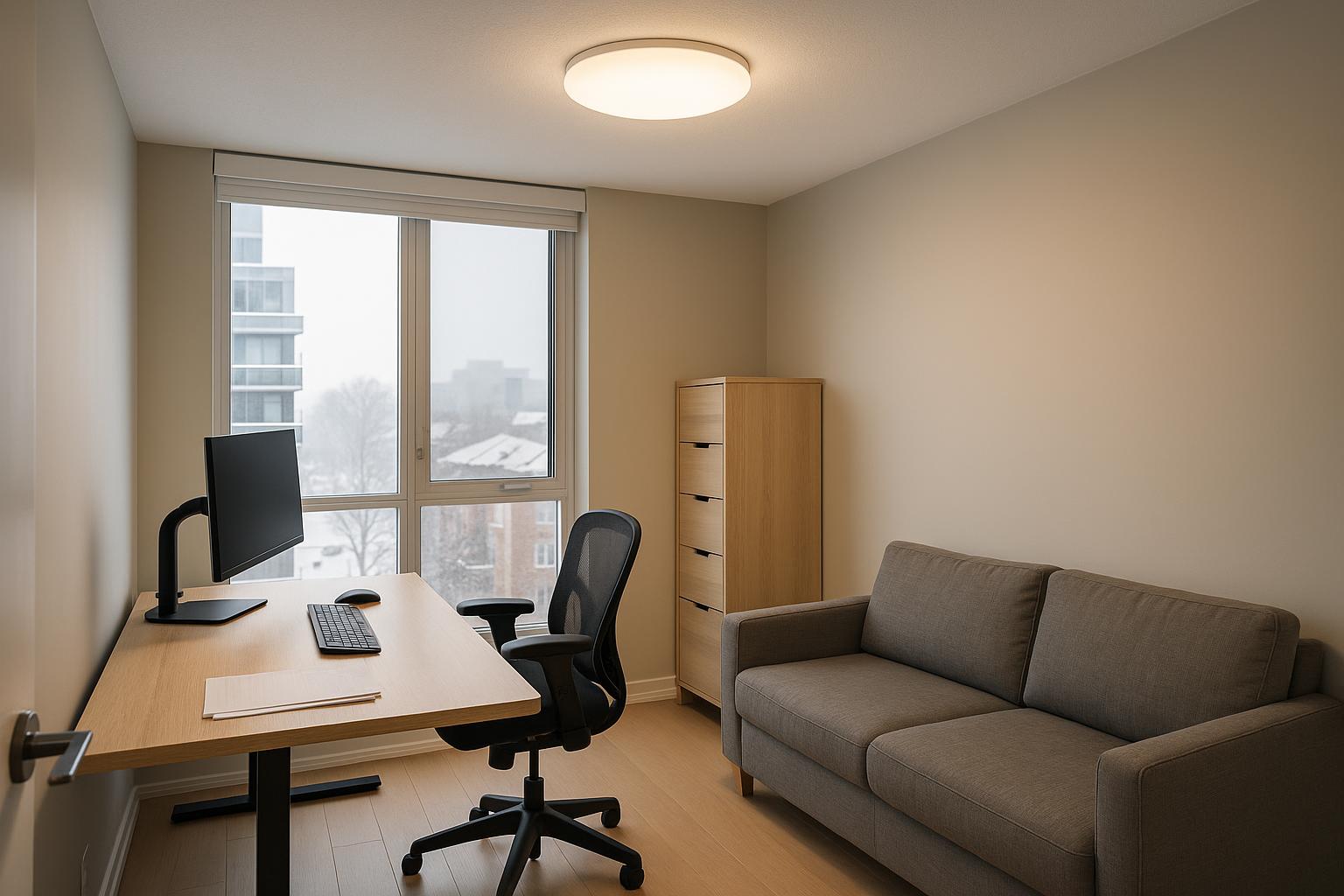
In the same direction, Put the Desk in Charge of the Ceiling Light offers useful ideas for choosing home lighting more confidently.
Test finishes in Canadian daylight
Snow reflection can make pale finishes look cooler and polished surfaces brighter than they appeared in a showroom. A north-facing room may flatten subtle grey or aged-white detail, while direct afternoon sun can expose artificial-looking distressing. Review finish samples or clear product photographs beside the room's windows at more than one time of day.
Dark bronze and black trace every curve against a light ceiling. Weathered white allows ornament to recede. Aged brass and muted gold can connect traditional detailing to contemporary furniture, but they need not match every cabinet pull or picture frame.
Repeat the finish once, if at all. A related warm metal on a sideboard lamp is enough to establish a connection. Slight variation feels more natural than a room in which the ceiling light, curtain rod, frames and furniture hardware share an identical finish.
Plan the room for exposed bulbs
Candle-style lamps are part of the chandelier's appearance even when switched off. Clear lamps make the light sources and internal structure more prominent. Frosted lamps reduce the sharpness of each bright point. Small shades soften the view further, although they add bulk and can make the fixture appear more formal.
The chandelier should not be responsible for every lighting task. During long winter evenings, a single bright source above the table can leave faces shadowed and the room perimeter dull. A shaded lamp on a sideboard, discreet wall sconces or light from an adjoining area can create a calmer balance. In an open-concept kitchen, keep dedicated task lighting over counters instead of increasing chandelier brightness to compensate.
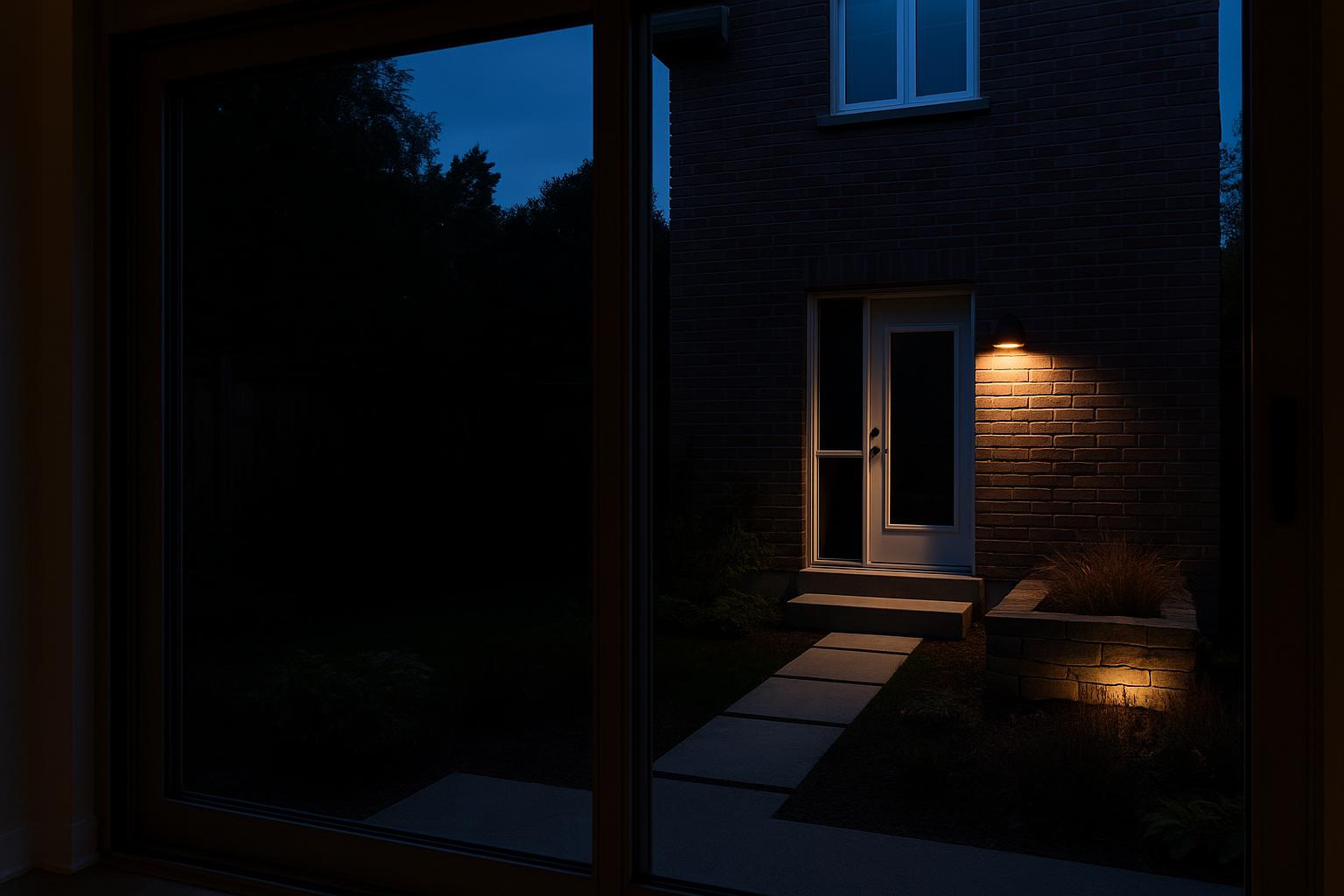
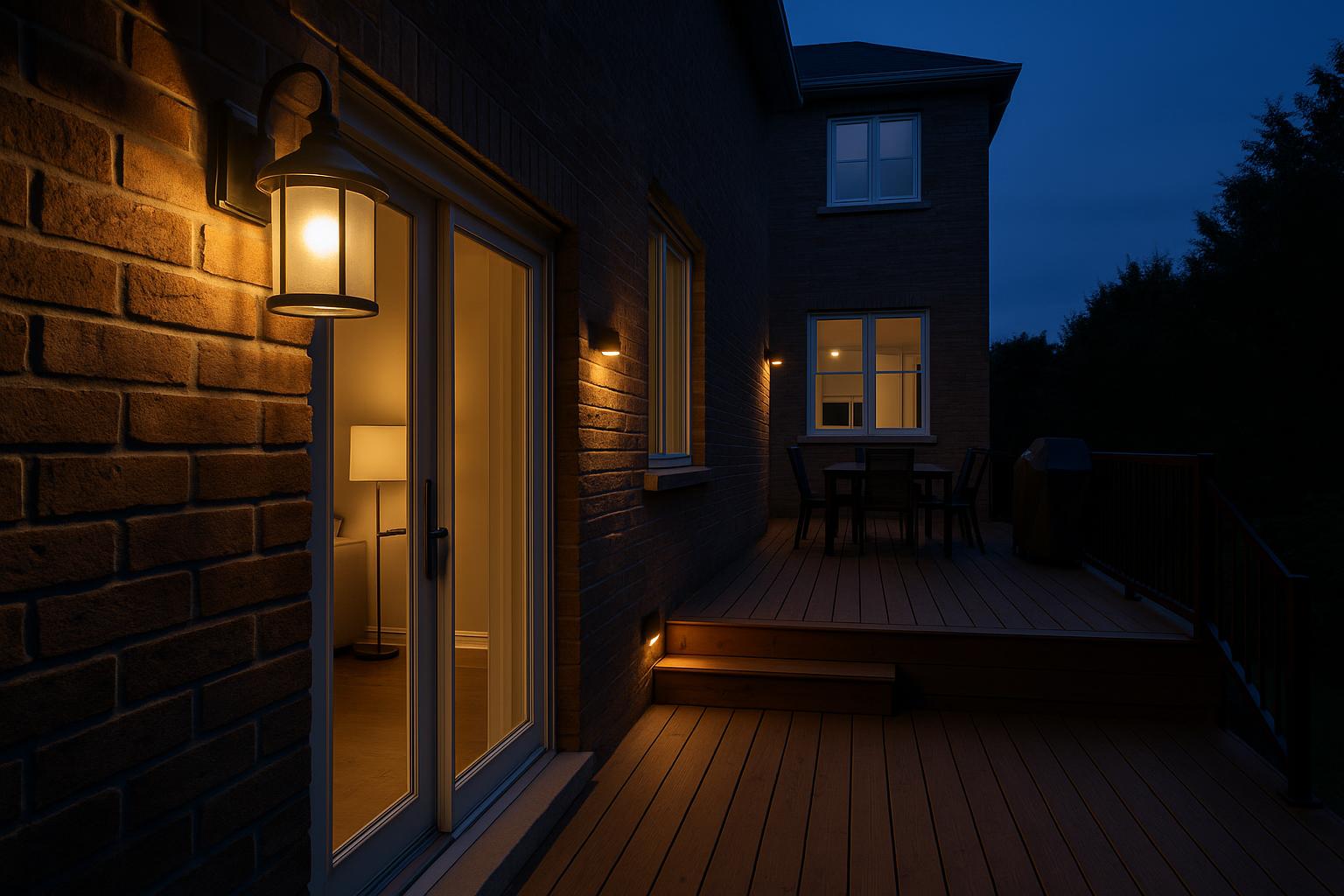
For more consistent lighting throughout the home, the article The After-Dark Walk-Through: Placing Deck Wall Lights with Purpose may also be helpful.
If dimming is planned, check that the lamps, fixture and control are intended to work together. Review the manufacturer's specifications, and use a qualified electrician for installation. Suitability for the ceiling, electrical box and local requirements should be confirmed before the fixture is ordered, not after it arrives.
Know when the country reference is complete
Once the chandelier supplies curved lines, an aged finish or rustic texture, the room may already contain enough country character. Remove one competing gesture before adding another. Plain curtains may be better than a floral pattern; one old wood piece may be stronger than a matching distressed dining set.

This restraint applies to country lighting and cottage lighting alike. Natural materials and signs of age are most effective when they appear to have accumulated over time, not when every item announces the same theme.
With the required silhouette, dimensions and suspension method noted, compare the French Country Chandeliers collection against photographs and measurements of the actual room. Ornament can make the shortlist, but proportion and light quality should make the final decision.
The chandelier does not need a supporting cast of matching accessories. Give it a clear purpose, a calm background and enough light around the room to be atmospheric rather than overbearing. It can then feel as though it arrived at a different time from the furniture, which is precisely what gives the interior depth.