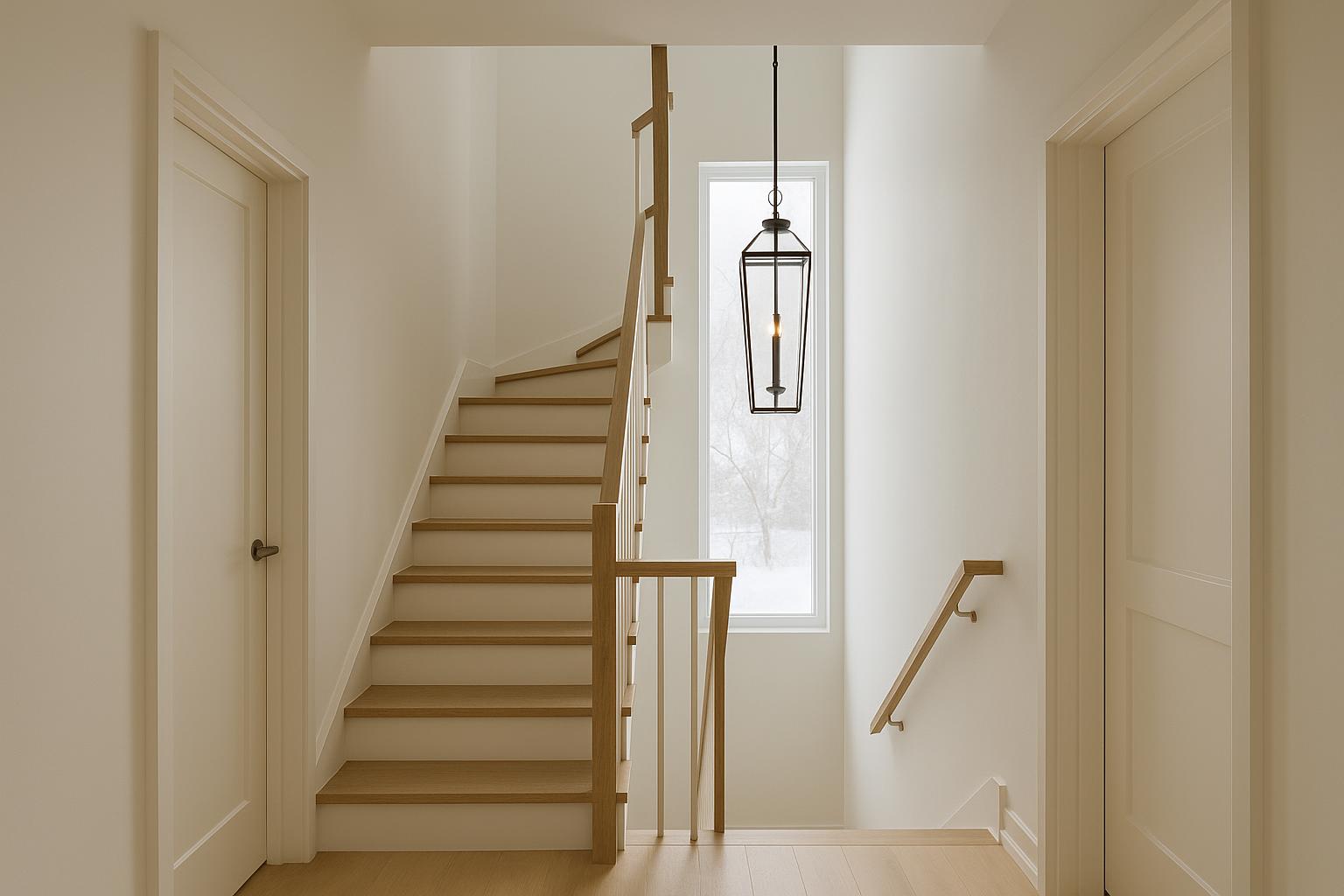
An antler pendant should belong to the cottage rather than turn the room into a lodge set. Start with the...
- There are no more items in your cart
- Shipping
- Total $0.00
Put the Desk in Charge of the Ceiling Light
Fix the desk location before choosing the light fixture
A ceiling outlet usually reflects the geometry of a room, not the position of its most important working surface. That distinction matters in a home office. A desk may be pushed towards a window, fitted into an alcove or placed along one wall to leave space for a sofa bed. A light fixture selected only for the centre of the ceiling can end up behind the chair, directly above the monitor or too far from paperwork to be useful.

Start by deciding where the desk is likely to remain. Mark the chair, monitor, keyboard and area used for documents. If the room serves another purpose, include the walking route, storage and any furniture that must still receive general light. This establishes whether the existing ceiling outlet can serve the working zone or whether the plan needs a different fixture shape, an additional layer or professional relocation of the electrical box.
Inspect the room from the chair
A floor plan cannot show everything that affects visual comfort. Sit at the desk and look at the ceiling, monitor and windows from normal eye level. A clear glass shade that seems attractive from the doorway may expose a bright bulb above the screen. A glossy diffuser may appear as a reflection in a dark monitor, particularly when the room is dim.
Daylight should be checked at more than one time of day. Low winter sun, snow reflection and short afternoon daylight can change a workable morning setup. Curtains or blinds may control glare, but the electric lighting should also make the office comfortable after dark.
- Look for reflected bulbs, bright shades and windows on the monitor.
- Check whether tall shelving blocks light from reaching files or the desk.
- Open cabinet and room doors to see where their shadows fall.
- Confirm that the fixture will not sit in a distracting line of sight.
Give the ceiling layer a defined job
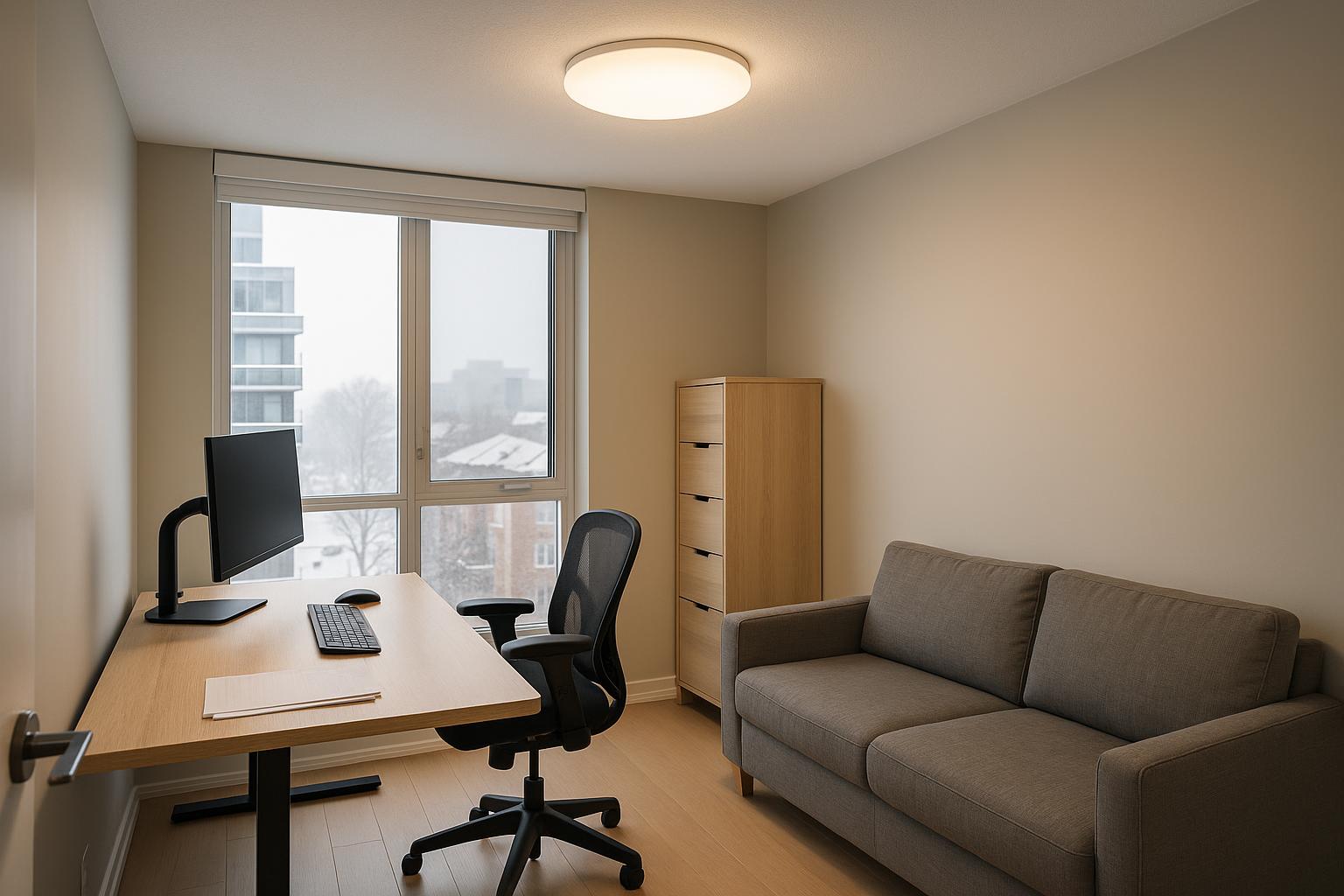
home office ceiling lights are most effective when they provide even background illumination rather than trying to perform every task. This layer should make it easy to enter the room, find supplies, read labels on storage and work at a screen without the surrounding room disappearing into darkness.
Light distribution matters as much as catalogue brightness. A broad diffuser spreads output across a larger area and conceals the brightest part of the source. A directional fixture sends more light towards selected surfaces but can leave nearby walls or shelves comparatively dark. Exposed bulbs and narrow beams need careful positioning because they can create uncomfortable brightness within the seated field of view.
Room finishes also change the result. A pale ceiling and soft grey walls return more light to the space than dark paint, brick or wood panelling. In a basement office with limited daylight and darker finishes, a fixture that appears adequate in a bright showroom may feel less effective at home.
Match the fixture profile to the room
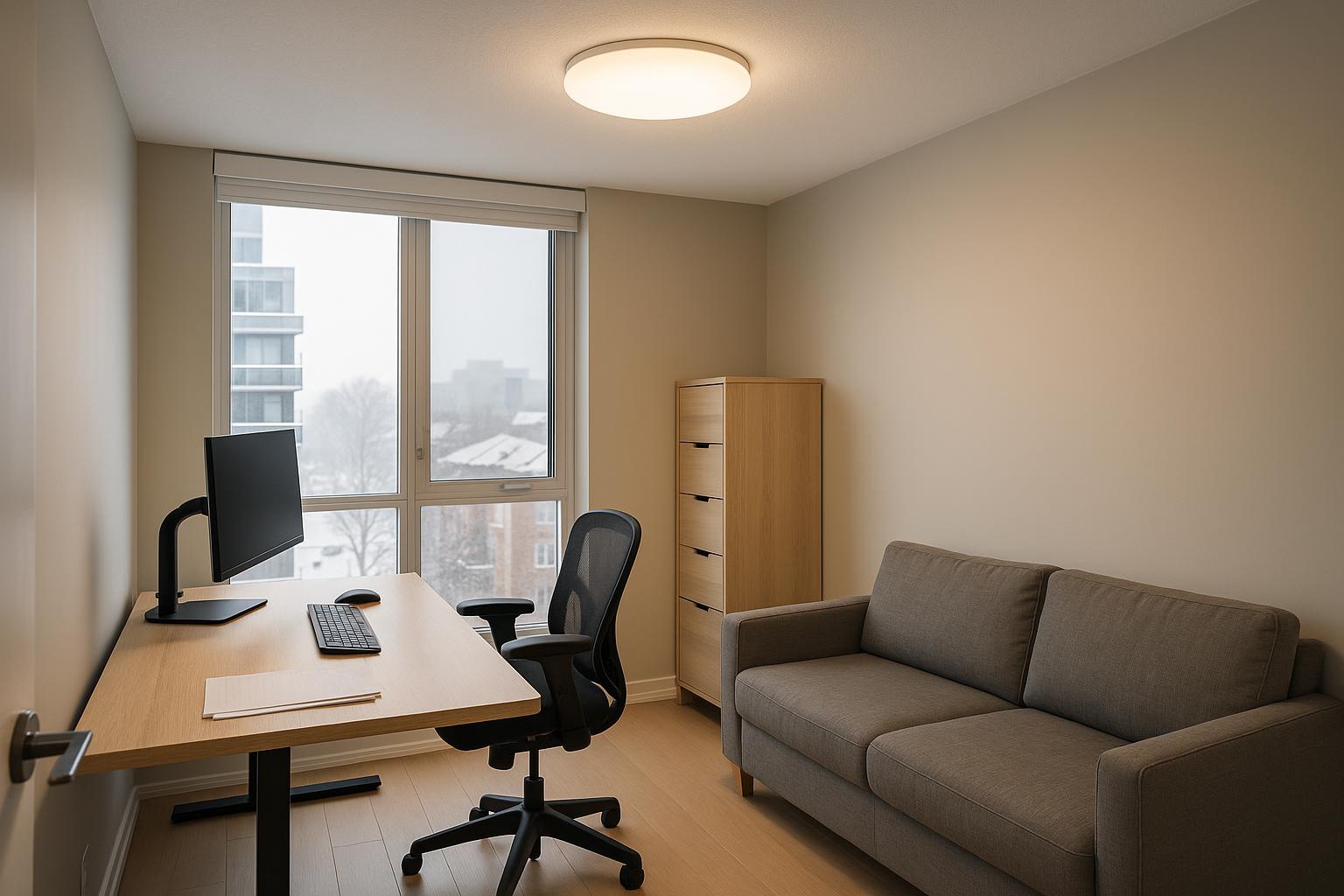
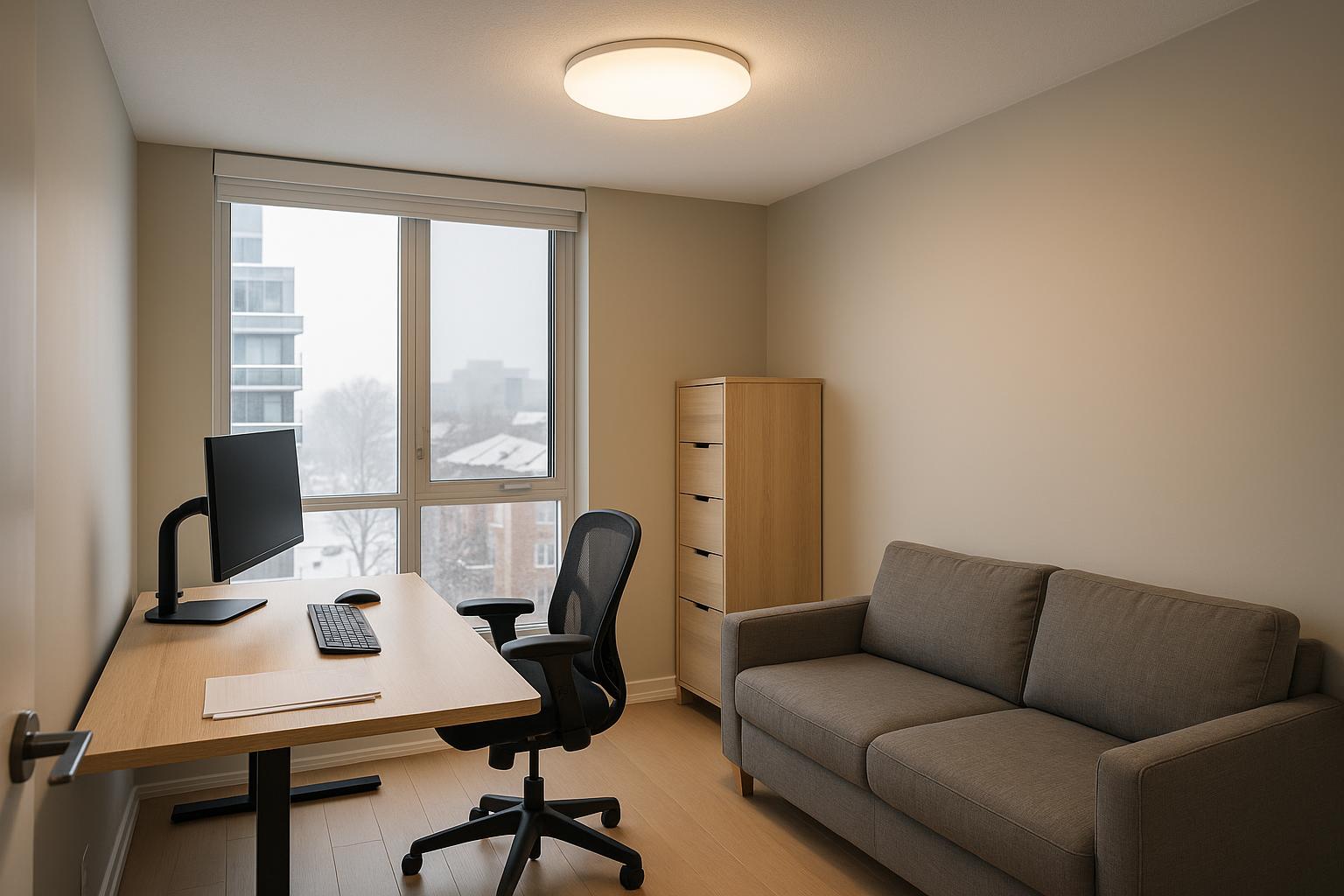
Measure the actual ceiling height rather than relying on a floor plan. Many condos and basement rooms have ceilings close to 2.4 metres, where a flush mount or shallow semi-flush mount usually preserves better headroom. Judge its depth from the doorway and desk, not just from directly underneath. A fixture can be physically out of reach yet still feel intrusive when it occupies the upper part of the view.
To complement this topic, you can also read The After-Dark Walk-Through: Placing Deck Wall Lights with Purpose.
Width deserves separate attention. A small fitting can look stranded in a dedicated office with a broad desk, while a large, visually heavy fixture may dominate a compact work corner. Shape can help connect the light to the room: an elongated fixture may suit a long shared workstation, while a wider circular design can spread light across a square den.
Consider future furniture changes as well. A centrally located, broadly diffused office ceiling light is more forgiving if the desk may move. A strongly directional fitting tied to the present layout offers less flexibility.
Reserve pendants for fixed work zones
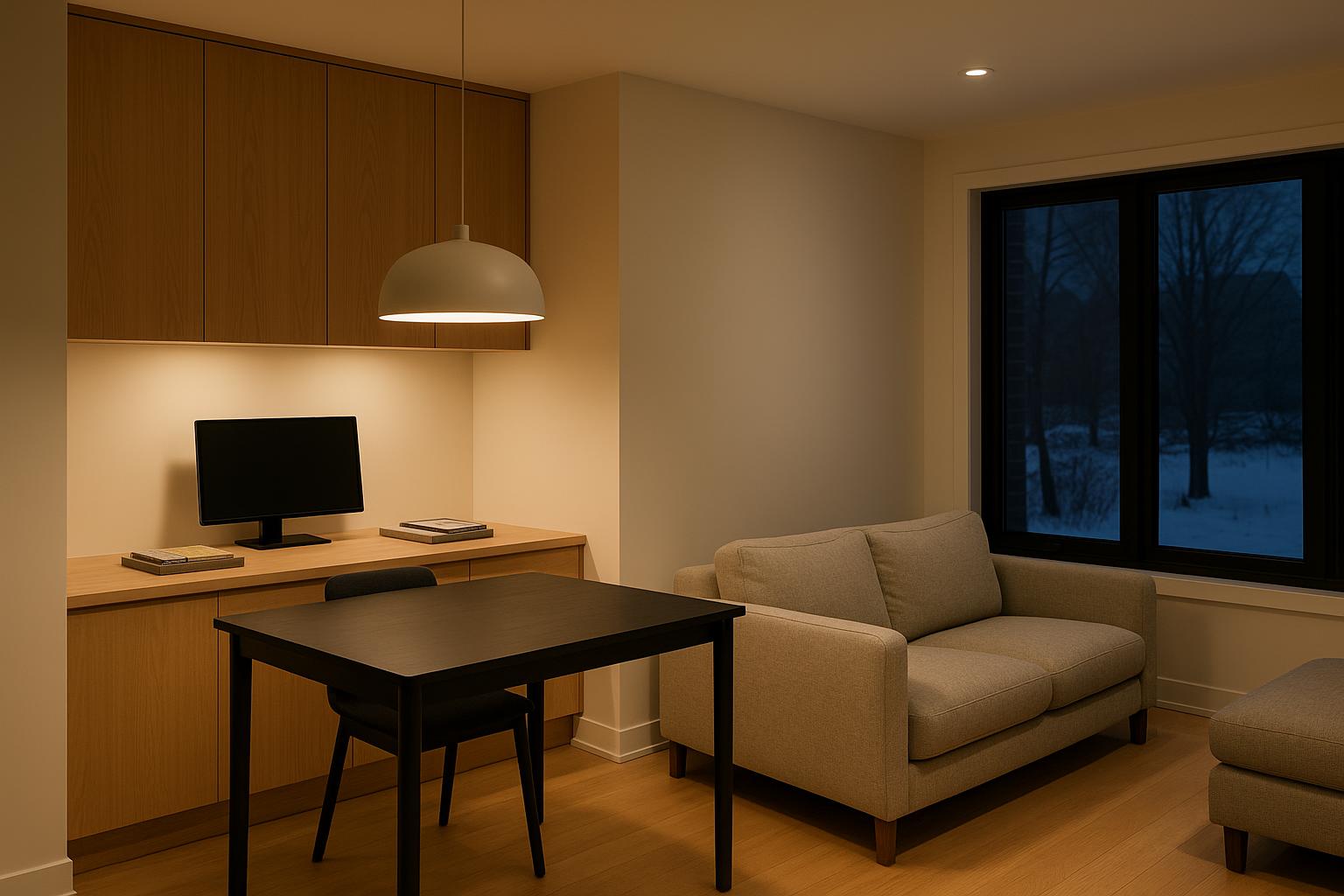
Office pendant lights can define a project table, reading corner or work alcove, especially in an open-concept family room. They are most convincing when the surface below has a permanent location. The pendant then acts as both a source of light and a visual boundary.

A pendant above the main computer desk requires more caution. Its shade should remain outside normal screen sightlines, provide comfortable standing clearance and avoid a bright reflection on the monitor. If the desk is likely to be reoriented, a fixed pendant can quickly become an obstacle. In a flexible spare room, a flush mount or semi-flush mount is usually the safer ceiling layer.
Add task lighting where detail matters
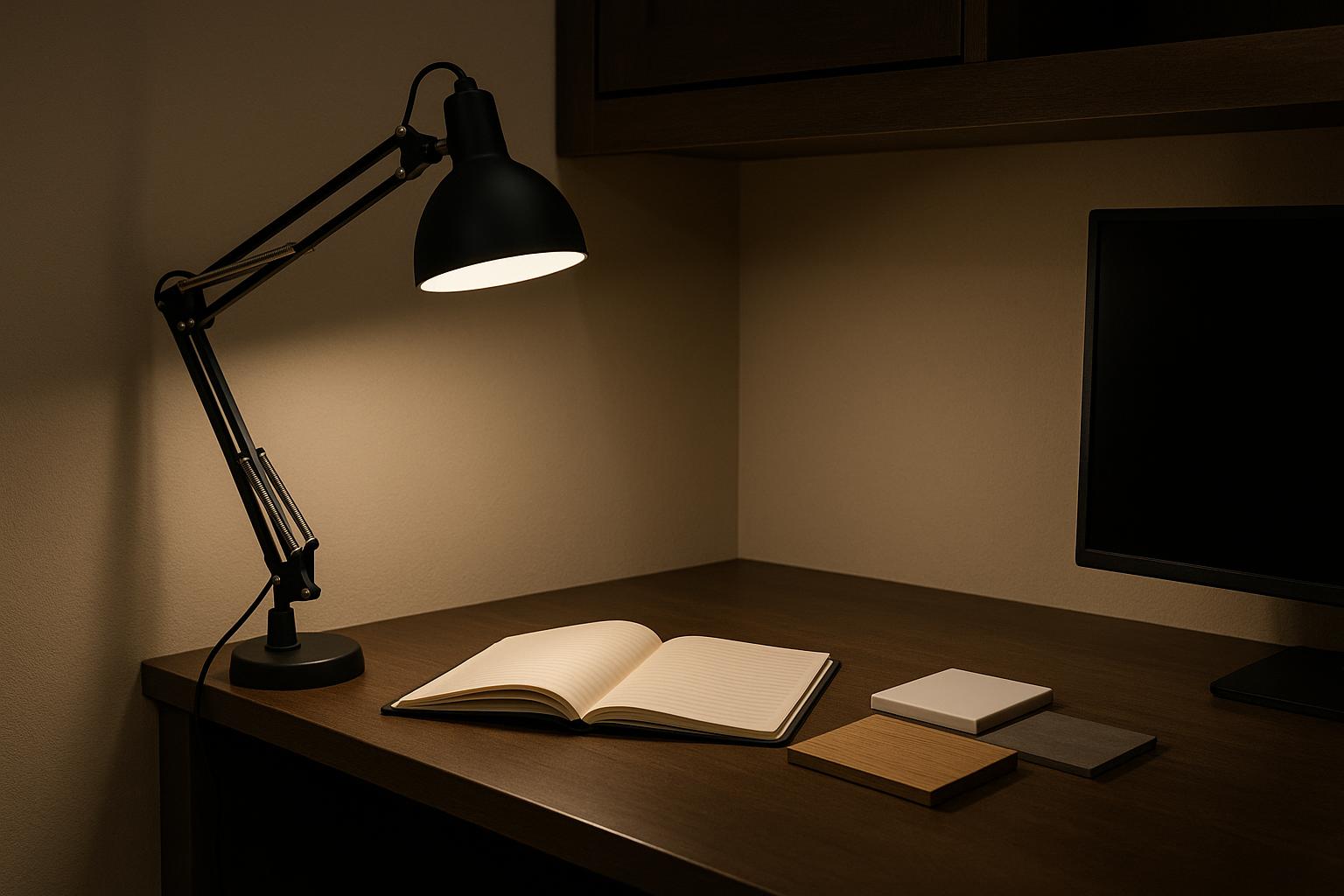
Desk lighting should solve close-range problems that the ceiling fixture cannot address efficiently. An adjustable desk lamp can put light on handwritten notes, drawings, fabric samples or small components without making the entire room brighter. A swing-arm wall sconce can serve the same purpose where desk space is limited.
For writing, place the task light on the side opposite the writing hand when the layout allows. This helps keep the hand from casting a shadow across the page. Aim the lamp below eye level and away from the monitor so that the source is neither directly visible nor reflected in the screen.
In the same direction, The Useful Dimming Range: Choosing Ceiling Lights for Canadian Homes offers useful ideas for choosing home lighting more confidently.
Do not use an intense desk lamp as the only light in an otherwise dark room. The sharp contrast between the bright work surface and dim surroundings can feel tiring. A moderate ceiling layer and a controlled task layer usually produce a more comfortable balance. Shared desks benefit from separate lamps so each person can adjust the direction and output independently.
Plan separately for video calls
Lighting that works for documents does not automatically flatter a camera image. A ceiling fixture directly overhead can brighten the desk while leaving the face unevenly lit. A window behind the chair may also turn the person on camera into a dark silhouette.
Keep the ceiling light responsible for the room rather than forcing it to become a studio light. If calls are frequent, a separate soft light near the monitor can illuminate the face from the front or slightly to one side. Check the camera view for bright windows, exposed bulbs and distracting reflections. A modest shelf or wall light can improve a dark background, but it should remain secondary to the person speaking.
Choose controls for a changing workday
An office rarely needs the same light level from morning to evening. General work, detailed reading and a late video call each use the room differently. Separate controls for ceiling, task and optional background lighting make those changes easier than operating everything from one switch.
Dimming can make the ceiling layer more adaptable, provided the light fixture, lamp or integrated LED and control are compatible. Confirm that compatibility before ordering. Also compare the colour appearance of the sources. They do not need to be identical, but a very cool ceiling light beside an unusually warm desk lamp can make paper, paint and skin tones shift noticeably between zones.
For more consistent lighting throughout the home, the article Modern Wall Lighting, Planned from the Wall Out may also be helpful.
Controls should be easy to reach. The ceiling light belongs at the room entrance, while a desk lamp switch should not require reaching behind a monitor or crawling under furniture.
Mock up the plan before installation
Use removable tape to mark the diameter or length of the proposed fixture on the ceiling. For a pendant, hang a lightweight cardboard outline at the planned height. View the mock-up from the desk, doorway and any nearby seating area. This simple test often reveals an awkward scale or sightline before electrical work begins.
Draw approximate paths from the fixture to the desk and storage. The sketch is not a lighting calculation, but it can expose obvious obstructions from shelves, open doors or ceiling beams. Confirm the product dimensions, mounting requirements and dimming information, then have hardwired work completed by a qualified electrician in accordance with applicable requirements.
Make a practical final shortlist
Begin the final comparison with position, distribution and fixture depth. Style and finish still matter, but they should follow the needs of the workstation. The right arrangement keeps the monitor readable, gives paper enough light, leaves storage usable and remains comfortable when the workday is over.

Top Lighting offers office lighting for Canadian homes suited to compact work corners, basement rooms and dedicated offices. Shortlist the ceiling layer first, then add task or background lighting only where the room has a clear need for it.