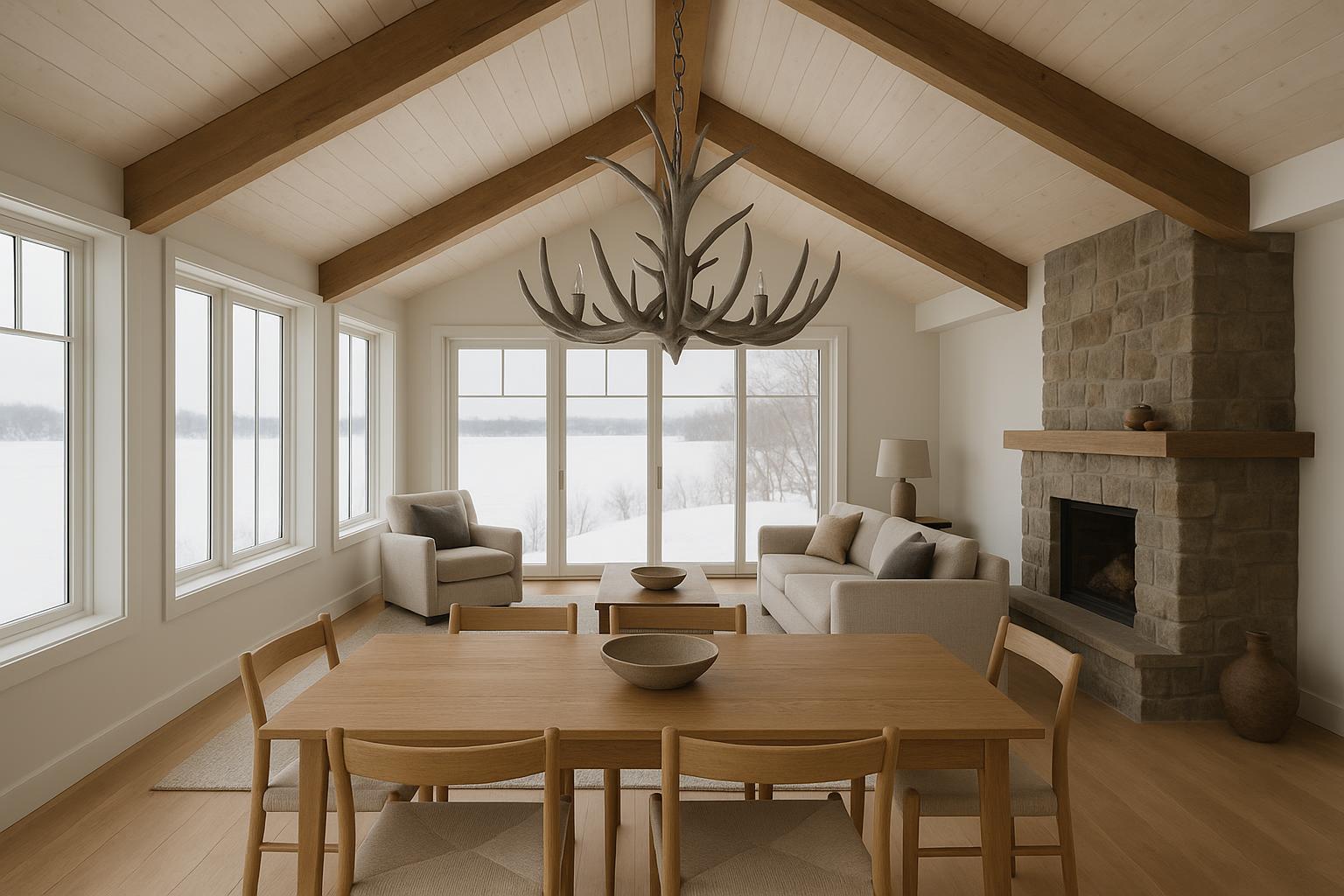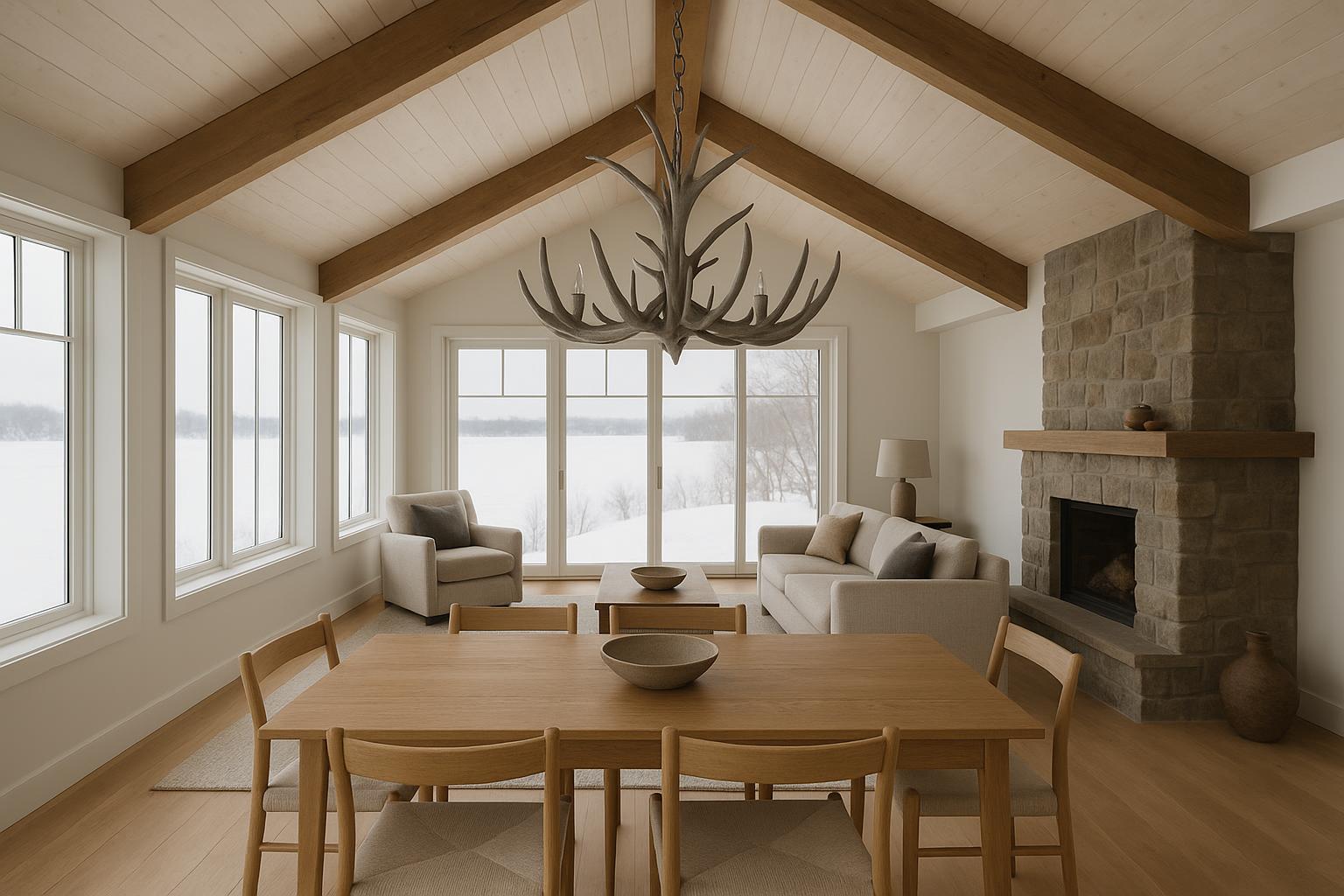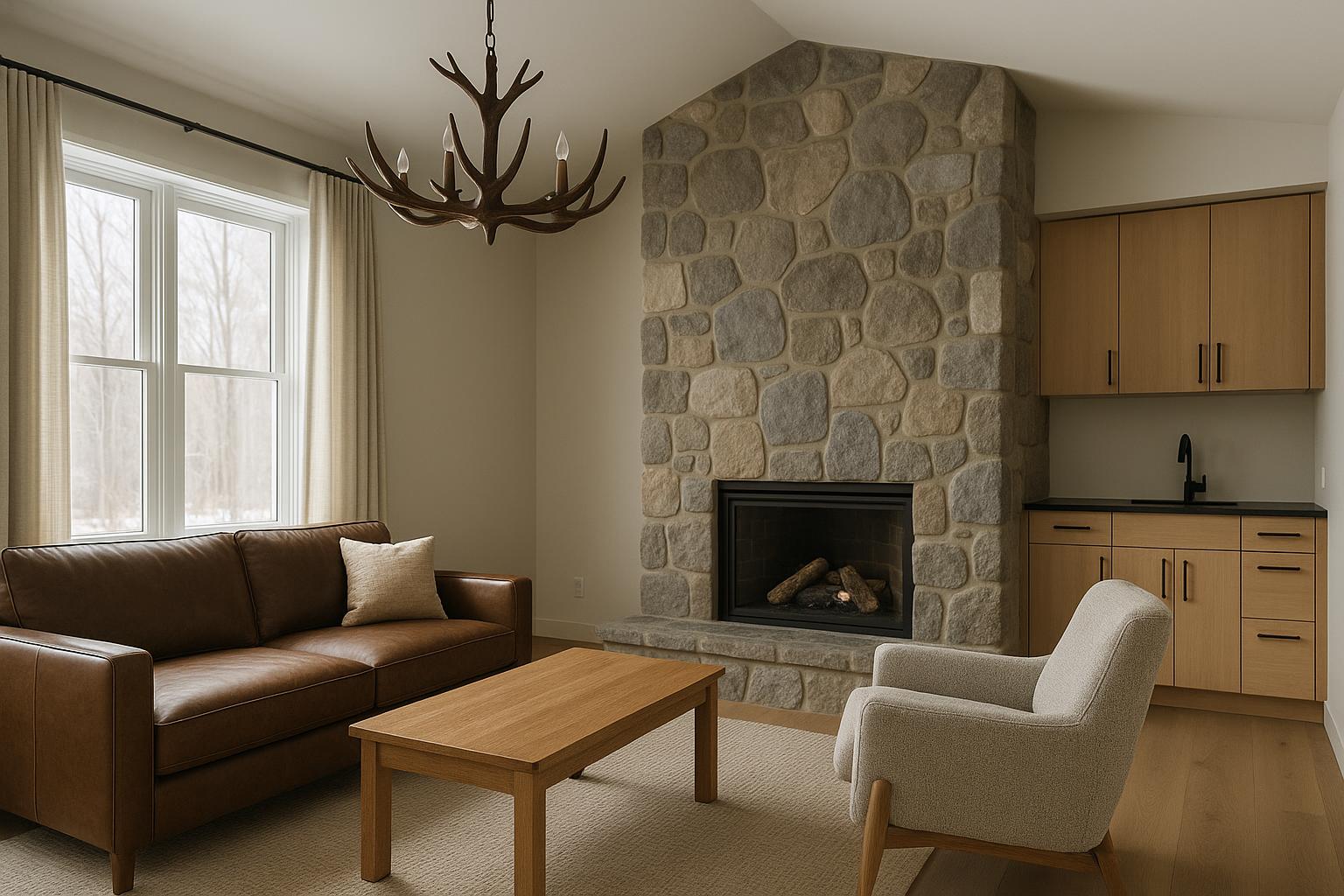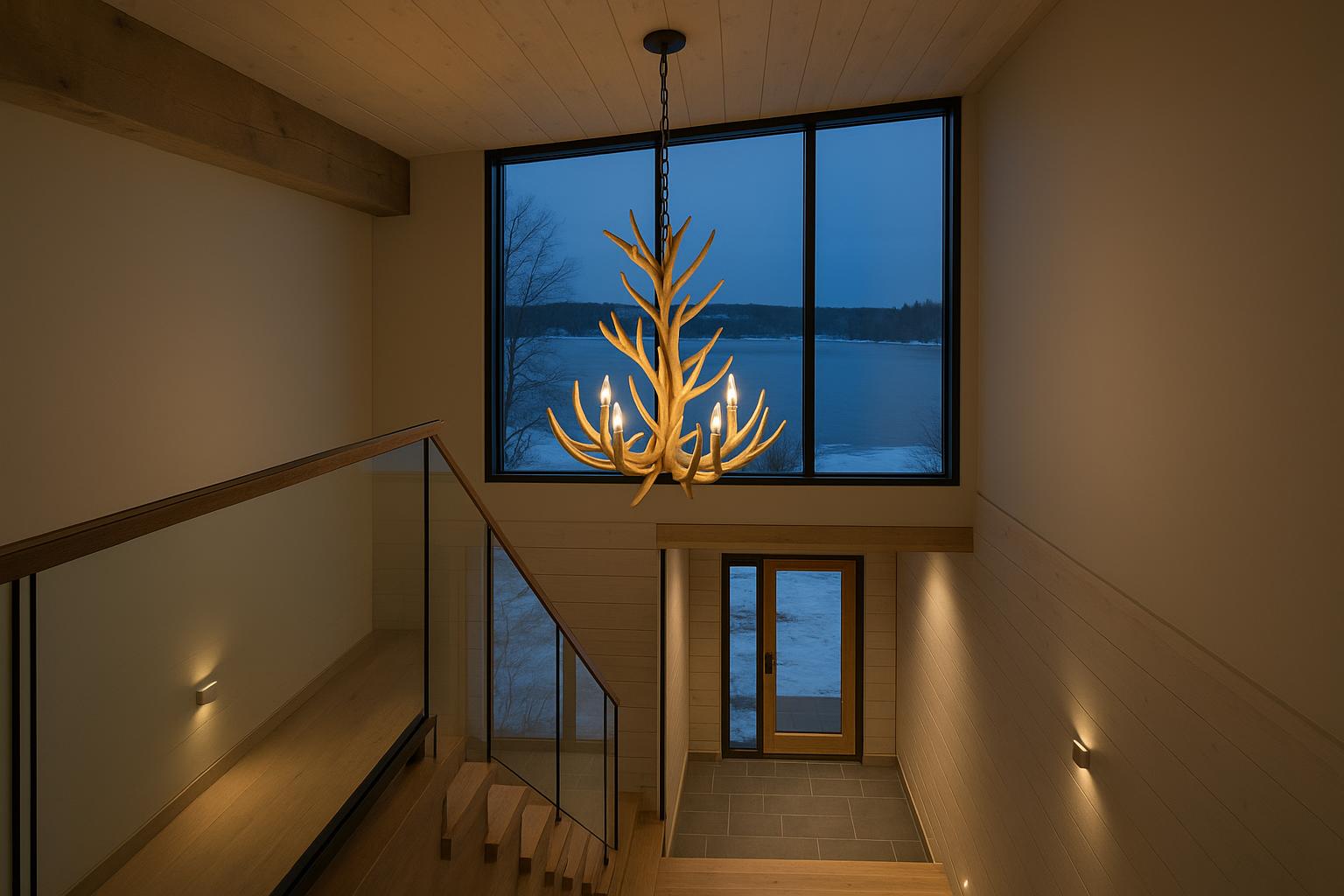
An antler pendant should belong to the cottage rather than turn the room into a lodge set. Start with the...
- There are no more items in your cart
- Shipping
- Total $0.00
Let the Cottage Lead: A More Restrained Antler Pendant
A cottage already has a strong visual vocabulary: timber, stone, water views, practical furniture and the marks of regular use. An antler pendant can add one memorable shape to that mix, but it should not have to explain the entire decorating scheme. When the fixture, fireplace, fabrics and accessories all repeat the same lodge message, the room can quickly feel staged.
When shopping for antler pendant lights for a cottage, begin with the job the fixture must do in the room. It may need to anchor a dining table, hold its own beneath a vaulted ceiling or provide a warm point of light after the windows turn dark. Those needs are more useful than choosing by branch count alone.
Choose the place the pendant should define
In an open-concept cottage, the middle of the ceiling is not always the right location. A pendant usually looks more settled when it belongs to a specific activity zone. Centre it on the dining table, island or main seating arrangement rather than on the combined kitchen and family room.

Look for permanent architectural lines before using furniture as the only guide. A ridge beam, fireplace, window bank or run of cabinetry may create a strong axis. If the dining table sits slightly away from that axis, decide which relationship matters more from the main approach to the room. A small offset can look deliberate when it clearly serves the table; a fixture stranded between two zones rarely does.
Mark the proposed centre on both the floor and ceiling. Stand at the kitchen sink, deck door, sofa and loft railing, if there is one. This reveals whether the existing electrical box actually suits the furnished room. Any change to the connection point should be planned with a qualified electrician.
Read the silhouette at full size
Catalogue dimensions describe the outer limits of a fixture, not how much space it appears to occupy. Two antler chandeliers of similar width can have very different visual weight. One may be airy enough to see the ceiling through it, while another may combine tightly grouped branches, lamp holders and suspension hardware into a dense central mass.
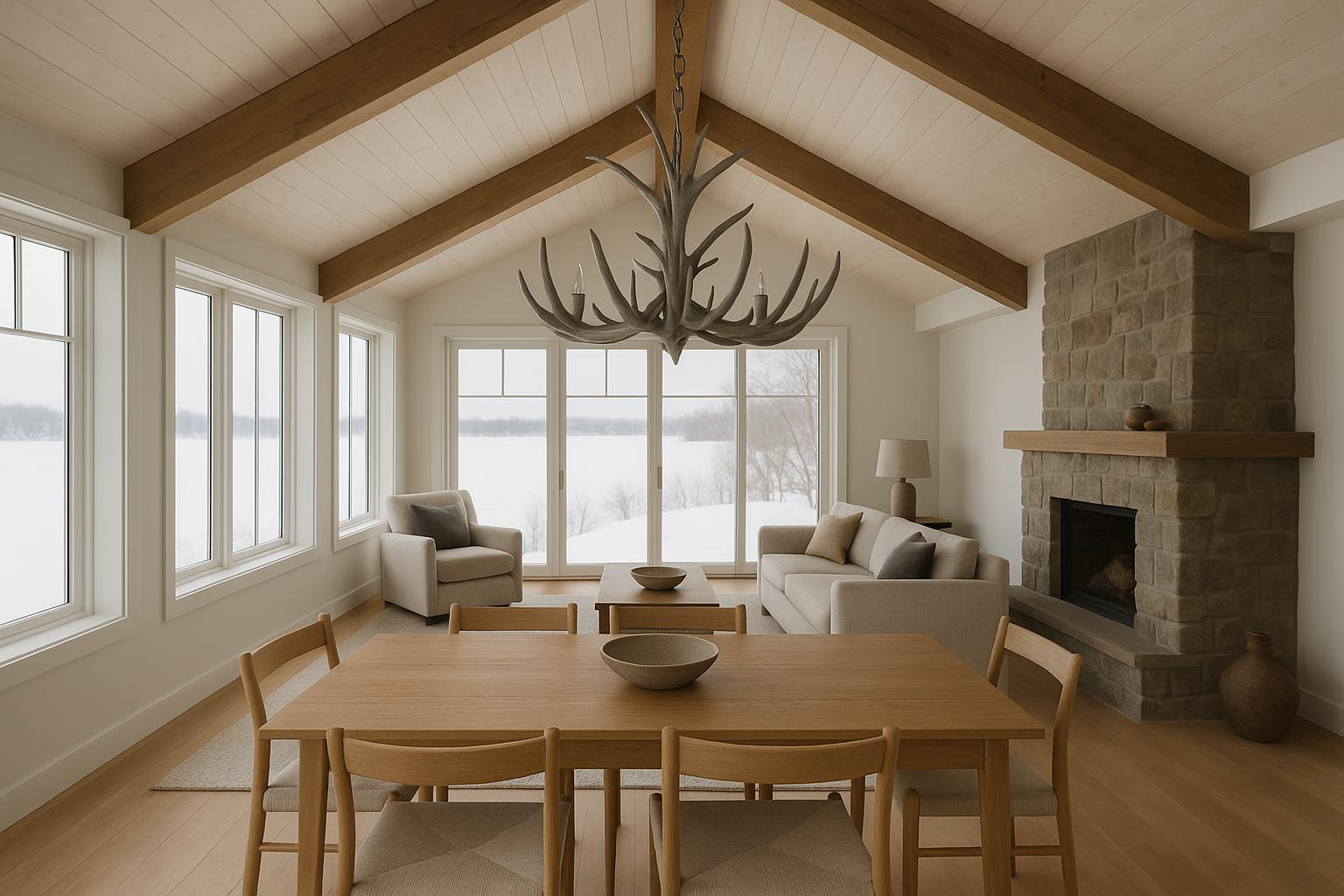
Consider the empty areas within the design. An open silhouette works well where exposed rafters, pale boards or a broad view should remain visible. A denser form can bring definition to a large, quiet room, but it may become tangled against log walls or heavy beams.
Finish affects the result as much as shape. Dark brown or black lodge-style fixtures stand out sharply against a whitewashed ceiling, particularly when winter snow reflects bright daylight through large windows. A weathered grey or lighter finish may sit more quietly with natural timber. Product photography can shift colour, so confirm the stated finish and material rather than judging from a styled room image alone.
Make a simple full-size outline from painter's tape or lightweight cardboard. Include the widest branch tips and overall body height, not just the central ring. The mock-up will not show depth, but it can expose conflicts with beams, cabinet doors and nearby circulation.
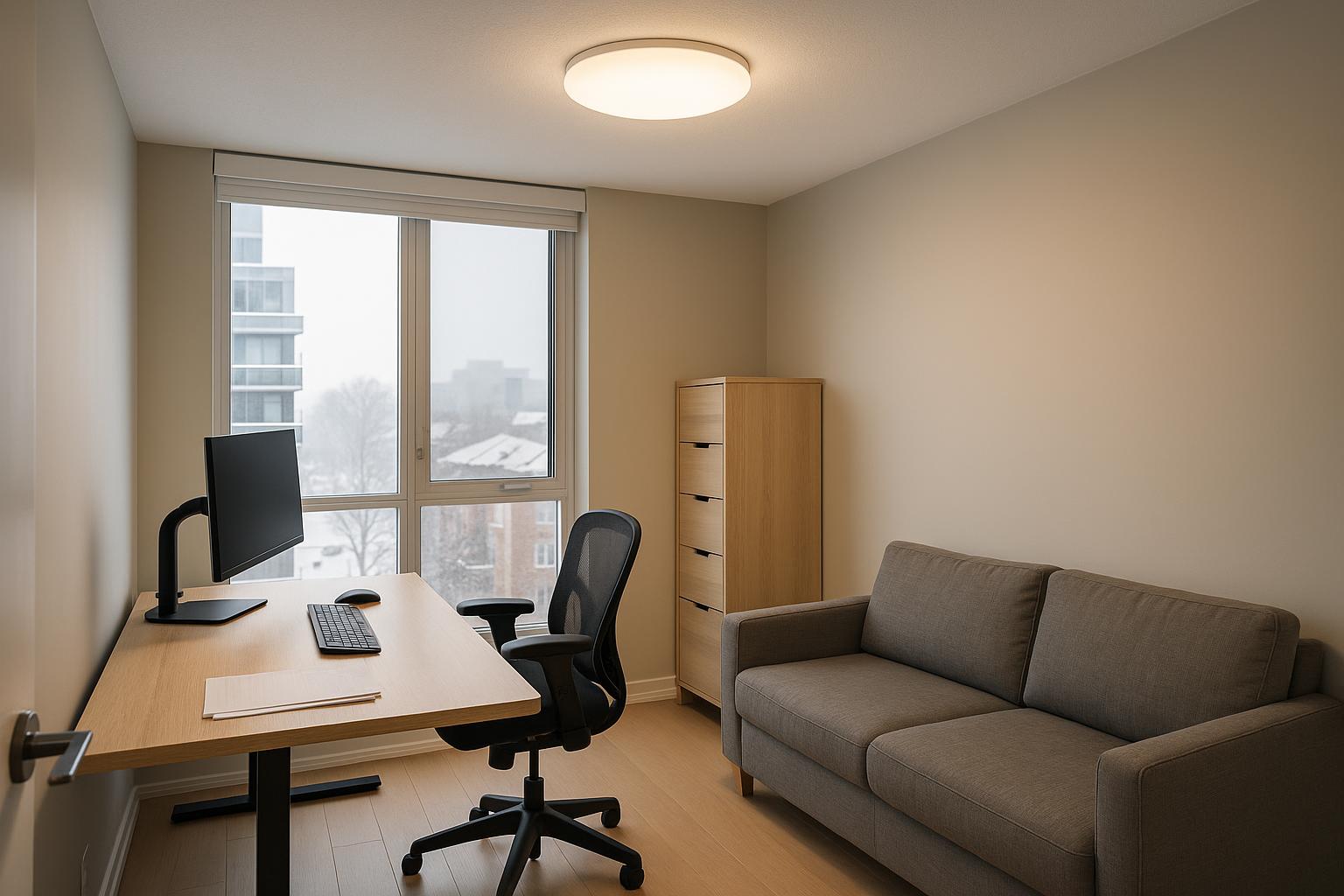
To complement this topic, you can also read Put the Desk in Charge of the Ceiling Light.
Make the suspension suit the ceiling
A vaulted ceiling offers vertical space, but it does not automatically call for the widest fixture available. Room width, roof pitch and beam size all influence proportion. A broad pendant hung from a narrow ridge can appear top-heavy, while a smaller open form may read clearly without competing with the roof structure.
Confirm that the canopy and suspension system are intended for the ceiling profile. A chain may hang vertically from a slope, but that does not mean every canopy, downrod or mounting arrangement is suitable. Check the product instructions before assuming an adaptor or site modification will solve the problem.
For a moderately low ceiling, concentrate on body depth as well as diameter. Upward-reaching branches can make the ceiling feel lower even when nobody is likely to touch them. A shallow rustic pendant light over a table may be more convincing than a compressed version of a tall chandelier.
Over a dining table, roughly 75 to 90 cm above the tabletop can be a useful starting range. Adjust it for the fixture's proportions, exposed bulbs and seated sightlines. Do not apply that range to a walkway. Areas where people pass underneath need appropriate overhead clearance, with the final height confirmed during installation.
Set a limit on rustic detail
Treat the antler pendant as one of the room's major textures. If the cottage already has a substantial stone fireplace and visible log or timber construction, the fixture may be the third strong element. It does not need support from wildlife art, antler accessories, plaid on every seat and several pieces of live-edge furniture.

Quieter materials give the branching form room to register. Plain linen curtains, wool upholstery, leather, simple oak and softly painted walls can all feel appropriate without repeating the motif. This restraint also makes it easier to change cushions, rugs and artwork later without fighting the light fixture.
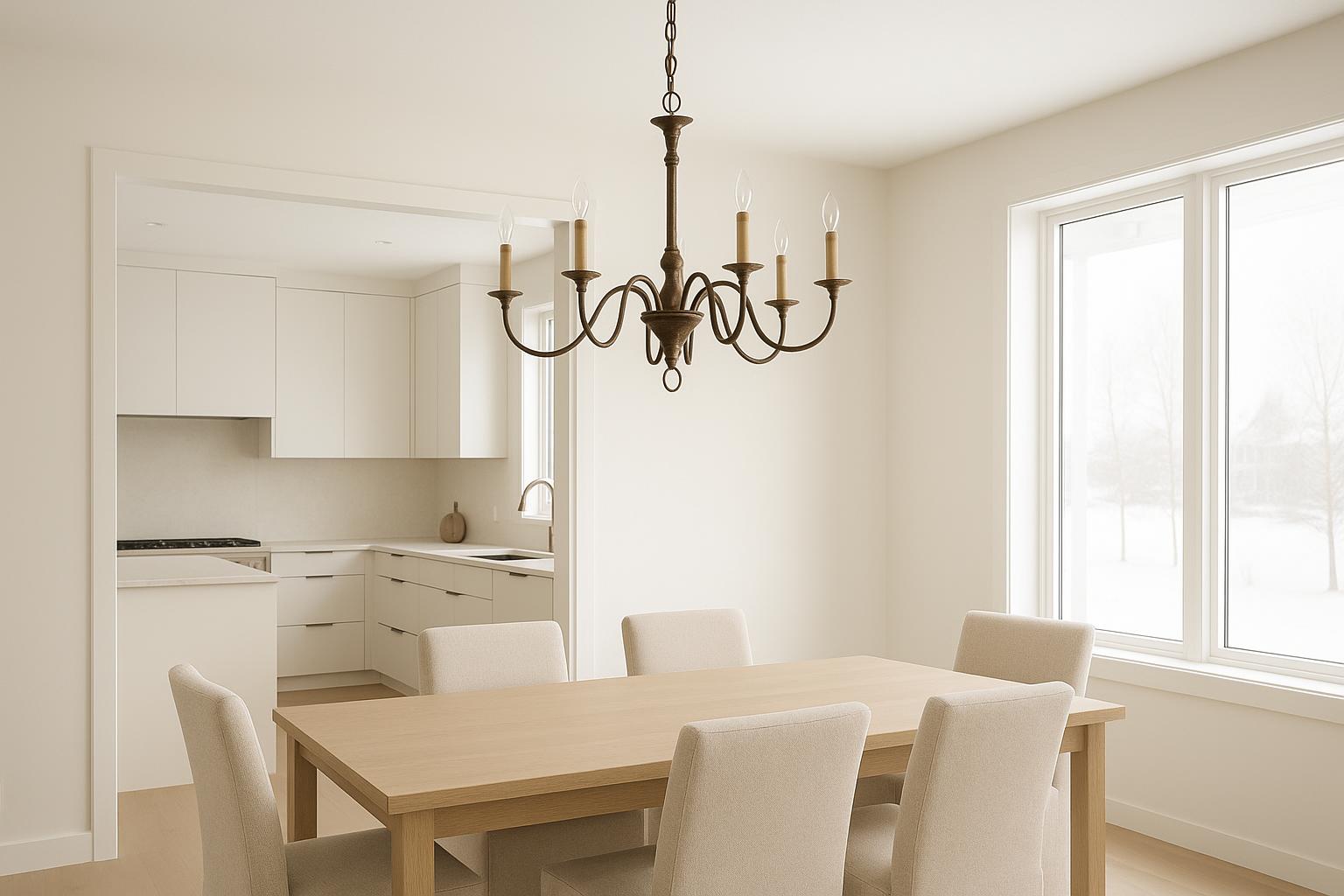
A contemporary counterpoint is often helpful. Flat-front cabinetry, restrained black hardware or a clean rectangular table can make an antler pendant feel sculptural rather than novelty-driven. The aim is not to remove cottage character. It is to decide which elements will carry it.
In the same direction, The After-Dark Walk-Through: Placing Deck Wall Lights with Purpose offers useful ideas for choosing home lighting more confidently.
Design the light as carefully as the fixture
An attractive silhouette can still produce uncomfortable light. Note the number and position of the lamps, whether they are exposed, and where they will sit relative to seated eye level. A cluster of bright points may be distracting from a sofa or especially harsh when viewed from an upper loft.
Check the specified lamp type, maximum wattage and dimming information. If dimming is important, the lamps, fixture and control must be mutually compatible. A dimmer can broaden the useful range, but it cannot correct poor placement or a bulb that remains glaring at low output.
Wood-rich interiors often suit warm-looking light, although colour should not be chosen in isolation. Consider what happens on the table and in the corners. Meals, food preparation, puzzles and board games need clearer illumination than conversation after dinner.
Do not ask the decorative pendant to perform every task. Under-cabinet lighting can serve counters, reading lamps can support seating, and discreet wall sconces or ceiling lights can keep the room from collapsing into darkness. Layering is particularly valuable during long winter evenings, when one bright overhead fixture can make the windows look black and leave the edges of a great room uninviting.
Inspect the view from windows and everyday routes
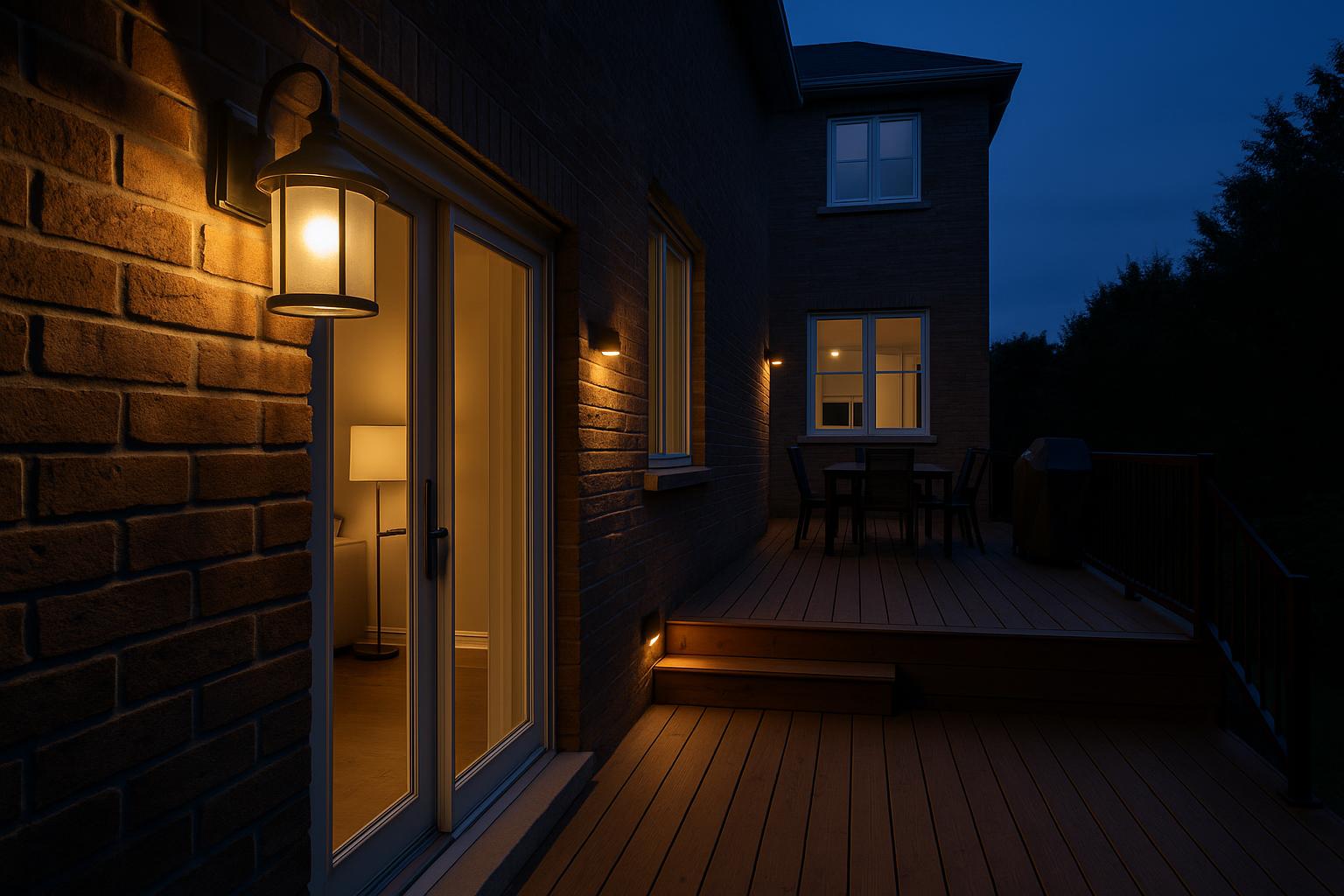
Cottage fixtures are often visible through wide openings and from outside on the deck. Walk the routes used for unloading groceries, serving dinner and moving between the family room and kitchen. From each position, check what sits behind the branches. A pendant that frames a fireplace or lake view can feel composed; one that visually collides with a railing, cabinet crown or beam may feel busier than it did in plan.
For more consistent lighting throughout the home, the article The Useful Dimming Range: Choosing Ceiling Lights for Canadian Homes may also be helpful.

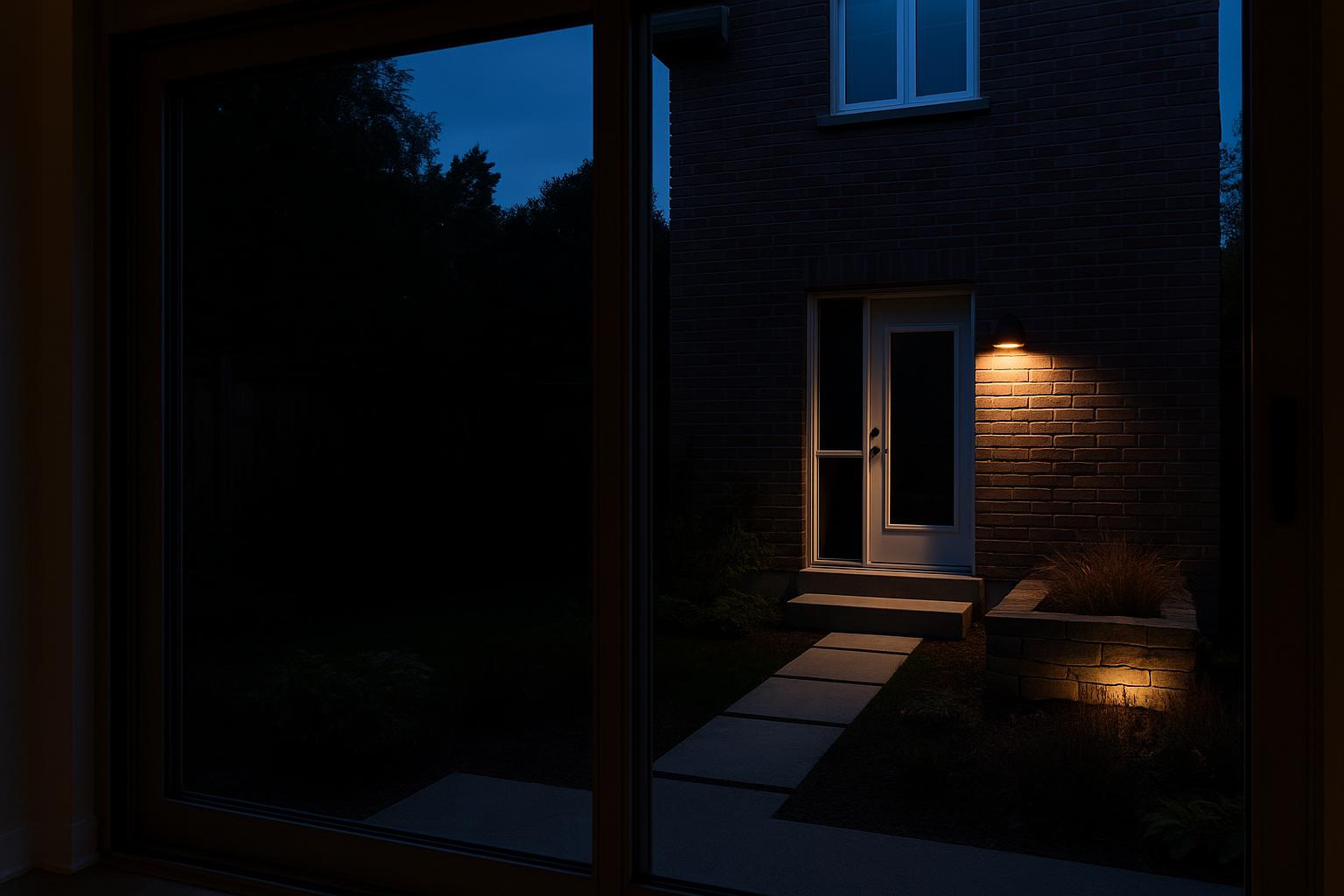
Windows create two different tests. By day, the fixture may become a dark silhouette against trees, sky or water. At night, exposed lamps can reflect in the glass and appear as a second fixture. A modest adjustment to the drop or position may improve both conditions without moving the pendant outside its furniture zone.
Repeat this review after sunset if possible. Daylight can disguise glare and leave the fixture looking lighter than it will during the season when the room relies most heavily on electric light.
Verify the less visible details before ordering
Once the shape and location make sense, move from room planning to product information. Compare the full width, body height, minimum and maximum drop, canopy dimensions, fixture weight and lamp requirements. For a seasonal cottage, check the manufacturer's stated environmental limits as well. An indoor decorative fixture should not be assumed suitable for a covered deck, damp location or unheated room.
- Confirm clearance from beams, cabinet doors and circulation paths.
- Verify compatibility with a sloped or vaulted ceiling.
- Review glare from both seated and standing eye levels.
- Make sure the ceiling structure and electrical box can support the fixture.
- Check lamp and dimmer compatibility before buying the control.
- Confirm how the fixture will be delivered and moved through cottage doorways or stairs.
With those decisions made, Top Lighting's antler pendant lights can be compared by silhouette, dimensions and suspension style. The most successful choice is not necessarily the most elaborate one. It is the fixture that gives a particular zone enough presence while leaving the cottage architecture legible.
Installation should follow the product instructions and be completed by a qualified electrician familiar with applicable provincial and local requirements. That check is especially important for wide or heavy fixtures, sloped ceilings and older cottage wiring.